Close
Approach Words: Environment Preservation, Sustainability, Urban Livability
Public Policy Instruments: Organization, Physical Intervention, Planning, Regulatory
The Riyadh Integrated Waste Management and Recycling Project is a major development initiative for the Saudi capital, Riyadh.1 It establishes a fully integrated circular-economy system, capable of handling municipal solid waste, construction and demolition debris, and other waste streams at industrial scale.2 The project was launched in July 2019 through a tripartite framework agreement between the National Waste Management Center, Riyadh Municipality, and the Saudi Investment Recycling Company (a Public Investment Fund subsidiary).3
The project envisions Riyadh as “a regional benchmark for zero-waste urban management.4 It aims to divert 81 percent of municipal solid waste from landfill,5 recycle 47 percent of construction and demolition waste,6 and eliminate 20 million tons of legacy debris accumulated across the city.7 These goals align with Saudi Arabia’s Vision 2030 target of raising the national recycling rate to 35 percent and promoting sustainable urban development.8
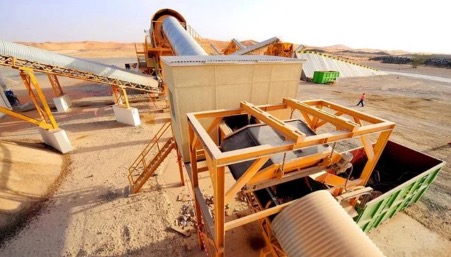
Title: This new facility is a key part of SIRC's strategy to develop advanced recycling and waste management infrastructure in Saudi Arabia.
Source: Click Here
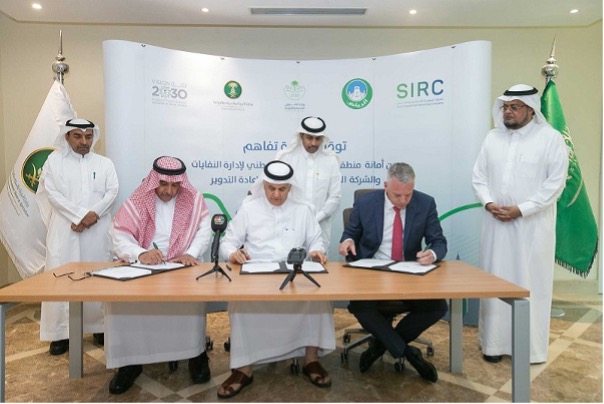
Title: The signing of a Memorandum of Understanding between the National Waste Management Center, Riyadh Municipality, and the Saudi Investment Recycling Company (SIRC). The agreement formalizes a partnership to implement Riyadh's comprehensive waste management and recycling strategy by 2035.
Source: Click Here
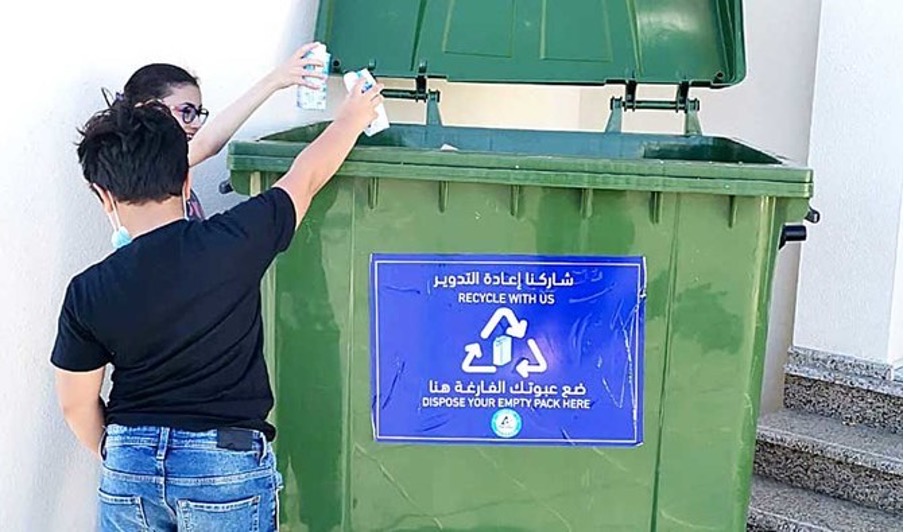
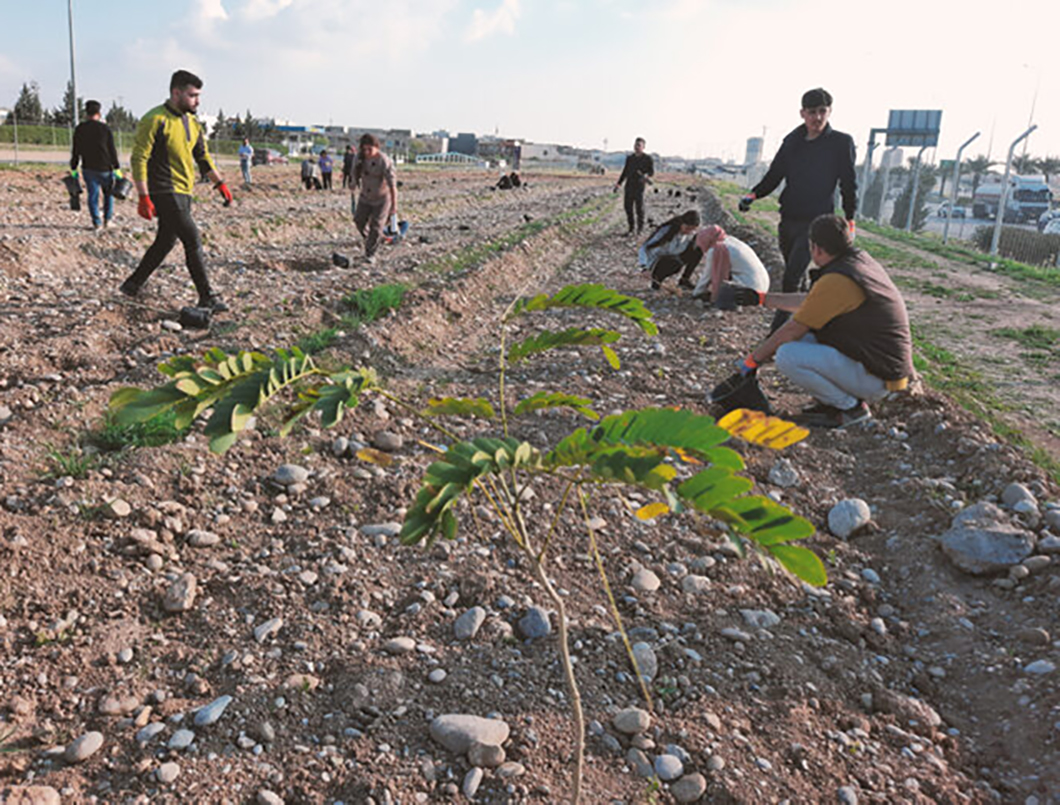
Title: An educational campaign engaging children in proper waste sorting and recycling practices.
Source: Click Here
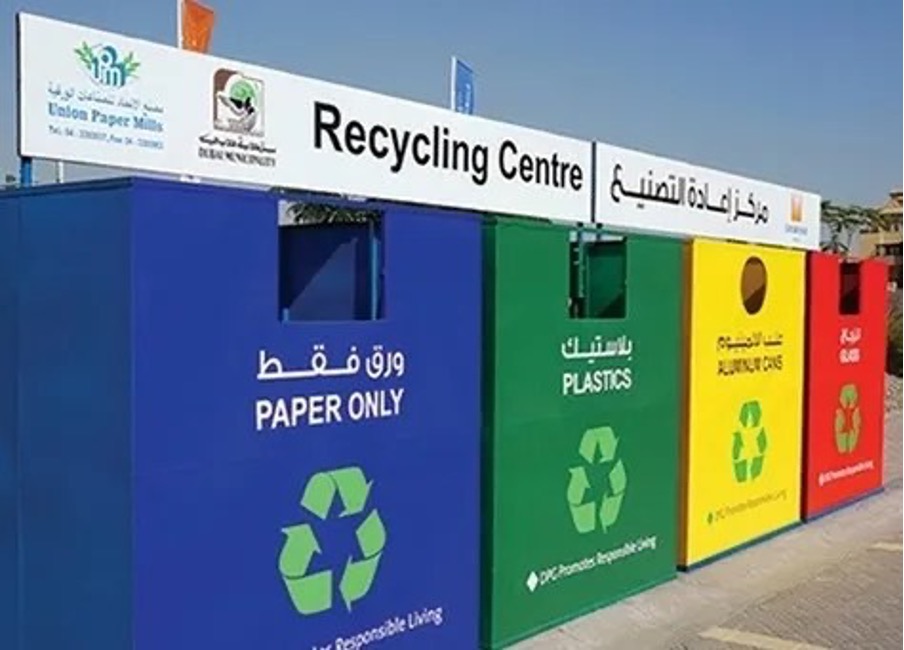
Title: Strategically placed recycling stations are deployed across the city to facilitate the source separation of waste materials.
Source: Click Here
Title: This new facility is a key part of SIRC's strategy to develop advanced recycling and waste management infrastructure in Saudi Arabia.
Source: Click Here
Title: The signing of a Memorandum of Understanding between the National Waste Management Center, Riyadh Municipality, and the Saudi Investment Recycling Company (SIRC). The agreement formalizes a partnership to implement Riyadh's comprehensive waste management and recycling strategy by 2035.
Source: Click Here
Title: An educational campaign engaging children in proper waste sorting and recycling practices.
Source: Click Here
Title: Strategically placed recycling stations are deployed across the city to facilitate the source separation of waste materials.
Source: Click Here
To implement these objectives, the Riyadh Integrated Waste Management and Recycling Project follows a waste management plan designed to restructure waste flows across the metropolitan area.9 Its key instruments include:
The project integrates sustainability features by converting organics into compost and biogas.15 It also incorporates the use of digital tracking systems and extended producer responsibility (EPR) for packaging.16 Public participation include outreach campaigns to teach residents proper sorting and recycling practices at the household level.17


Consultant/Designer

Funder

Contractor/Implementer
Contractor/Implementer
Funder
Consultant/Designer
The project is managed jointly by the National Waste Management Center, Riyadh Municipality, and the Saudi Investment Recycling Company.18 Technical support has been provided by advisers such as Ricardo, which prepared the original waste strategy for Riyadh.19 Broader collaboration involves government entities, private contractors, and local communities engaged in the dual-bin roll-out.20
The project’s implementation is divided into three phases:
Currently, the project is in Phase 2, with pilot dual-bin collection systems operational in selected districts.24
Project Link
https://global-recycling.info/archives/3215
Endnotes
N.A
References
An online library where you can explore relevant data on urban development in the Arab cities.
More




Lorem ipsum dolor sit amet consectetur. Lacus nibh neque erat massa elementum. Ultricies ante sed sed nunc massa ider.
Last updated 3 mins ago
Lorem ipsum dolor sit amet consectetur. Lacus nibh neque erat massa elementum. Ultricies ante sed sed nunc massa ider.
Last updated 3 mins ago
Lorem ipsum dolor sit amet consectetur. Lacus nibh neque erat massa elementum. Ultricies ante sed sed nunc massa ider.
Last updated 3 mins ago
Lorem ipsum dolor sit amet consectetur. Lacus nibh neque erat massa elementum. Ultricies ante sed sed nunc massa ider.
Last updated 3 mins ago
Lorem ipsum dolor sit amet consectetur. Lacus nibh neque erat massa elementum. Ultricies ante sed sed nunc massa ider.
Last updated 3 mins ago
Lorem ipsum dolor sit amet consectetur. Lacus nibh neque erat massa elementum. Ultricies ante sed sed nunc massa ider.
Last updated 3 mins ago