Close
Approach Words: Environment Preservation, Sustainability, Urban Resilience
Public Policy Instruments: Communicative, Physical Intervention
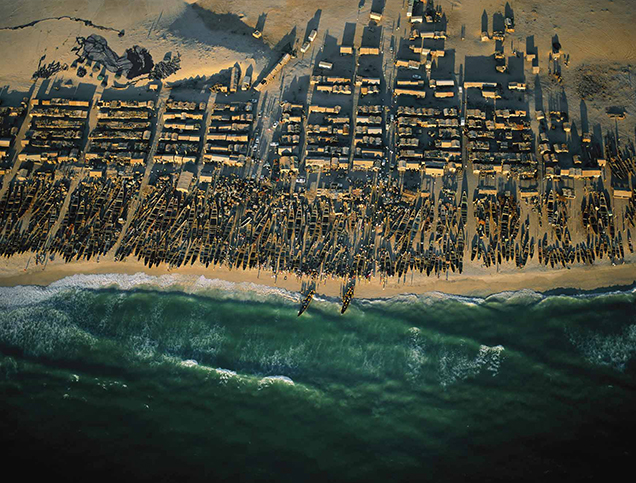
The Single-Use Plastic Awareness Campaign is a national environmental initiative launched by Mauritania’s Ministry of the Environment and the WACA Program (West Africa Coastal Areas Program)i on World Oceans Day 2024.1 The campaign seeks to reduce the circulation of single-use plastic bags across Mauritania’s urban and coastal zones, especially in high-footfall markets such as Nouakchott’s fish market, by coupling mass awareness with behavioral change. Through loudspeaker announcements, flyers, posters, branded items, and national television broadcasts, it highlights the environmental, health, economic threats posed by plastics.2
The campaign envisions a “cleaner and healthier Mauritanian coastline and urban environment where citizens, businesses, and authorities collectively phase out single-use plastic bags in favor of reusable or biodegradable alternatives.3 It aims to cut plastic bag consumption, improve compliance with the national plastic-bag ban, and safeguard coastal ecosystems, fisheries, livestock, and public health from impacts of plastic leakage.4
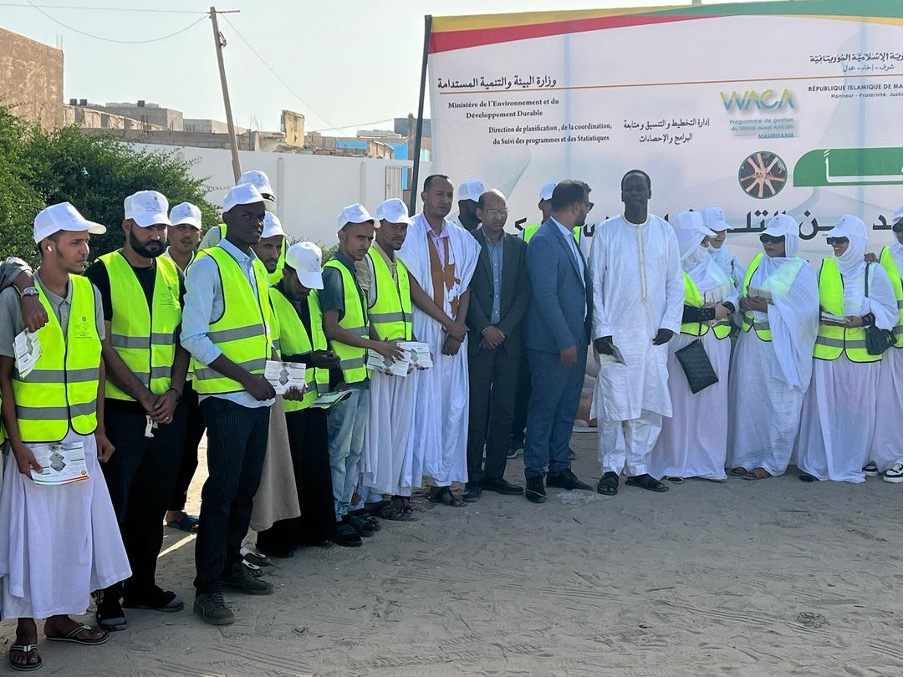
Title: Volunteers and officials in Nouakchott gather under the Ministry of Environment and WACA banner to launch the anti-plastic bag awareness drive, preparing to distribute flyers and engage market-goers.
Source: Click Here
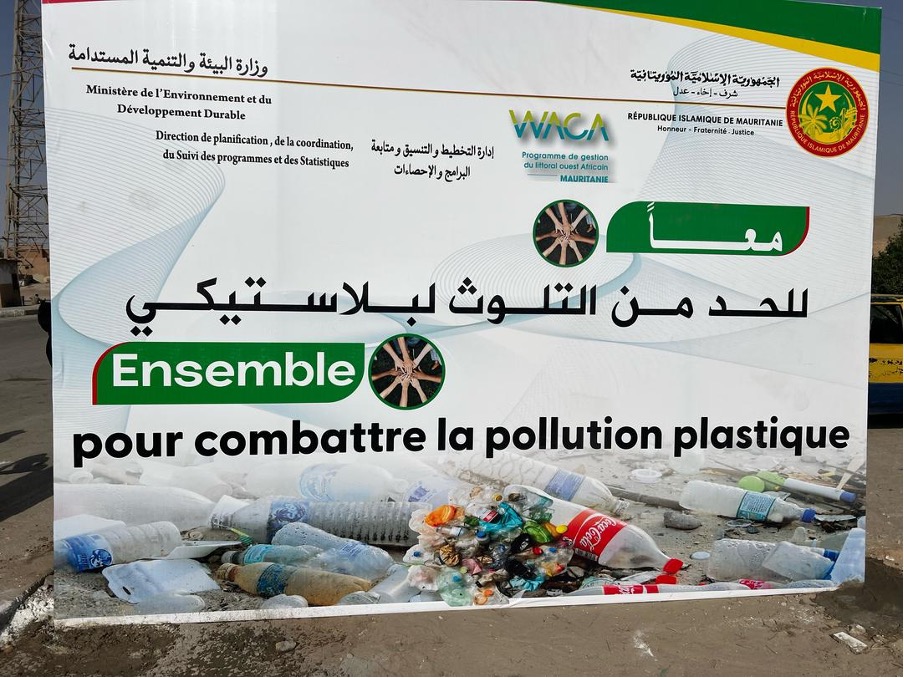
Title: The Campaign billboard.
Source: Click Here
Title: Volunteers and officials in Nouakchott gather under the Ministry of Environment and WACA banner to launch the anti-plastic bag awareness drive, preparing to distribute flyers and engage market-goers.
Source: Click Here
Title: The Campaign billboard.
Source: Click Here
To translate this vision into practice, the campaign is structured around the five main components:5 6
These combined tools support behavior change and build public understanding of plastic’s environmental cost, contributing to cleaner markets, reduced leakage, and stronger municipal waste systems.7 8

Owner/Developer (Public)

Funder
Owner/Developer (Public)
Funder
The campaign is led by Mauritania’s Ministry of the Environment in coordination with municipalities and relevant sectoral ministries, including health, fisheries, livestock, and education.9 Implementation mobilizes communities, vendors, women’s and youth groups, and citizens as partners in local behavior change, while national TV and local radio sustain messaging. The WACA Program/World Bank provides technical support, regional coordination, and access to shared knowledge platforms, and private suppliers and recyclers help scale reusable alternatives and recovery systems. Legal and enforcement bodies ensure comppliance with the national plastic-bag ban, reinforcing public communication with on-the-ground action.10
Collectively, these actors contribute to a measurable decline in plastic-bag use, protection of coastal ecosystems, and healthier, cleaner public spaces in Mauritania’s urban and coastal areas.11
Project Link
Endnotes
References
An online library where you can explore relevant data on urban development in the Arab cities.
More



Lorem ipsum dolor sit amet consectetur. Lacus nibh neque erat massa elementum. Ultricies ante sed sed nunc massa ider.
Last updated 3 mins ago
Lorem ipsum dolor sit amet consectetur. Lacus nibh neque erat massa elementum. Ultricies ante sed sed nunc massa ider.
Last updated 3 mins ago
Lorem ipsum dolor sit amet consectetur. Lacus nibh neque erat massa elementum. Ultricies ante sed sed nunc massa ider.
Last updated 3 mins ago
Lorem ipsum dolor sit amet consectetur. Lacus nibh neque erat massa elementum. Ultricies ante sed sed nunc massa ider.
Last updated 3 mins ago
Lorem ipsum dolor sit amet consectetur. Lacus nibh neque erat massa elementum. Ultricies ante sed sed nunc massa ider.
Last updated 3 mins ago
Lorem ipsum dolor sit amet consectetur. Lacus nibh neque erat massa elementum. Ultricies ante sed sed nunc massa ider.
Last updated 3 mins ago