Close
Approach Words: Capacity Building, Environment Preservation, Sustainability
Public Policy Instruments: Financial Mechanism, Physical Intervention, Planning, Regulatory
The AIM-WELL (Algeria Integrated Management of Waste Energy at the Local Level) is a new development initiative for the cities of Constantine and Sétif in Algeria.1 It represents the first integrated waste-to-energy (WtE) project in Algeria, combining a solid waste management, fertilizer production, and renewable energy generation.2 The initiative began in October 2018 with the submission of Project Identification Form to the Global Environment Facility (GEF).3
The vision of AIM-WELL is to “promote an integrated and comprehensive solid waste management by fostering technology deployment, dissemination, and transfer in collaboration with private sector”.4
It aims to reduce waste volume at source and minimize transport distances to engineered landfills,5 create added value by transforming waste and poultry manure into fertilizer and energy, as well as strengthen and promote the municipal model of integrated waste management at regional and national scales.6
These goals align with Algeria’s National Program for Integrated Management of Household and Similar Waste (PROGDEM) and the National Strategy for Integrated Waste Management 2035 developed under the PAPSE Waste-2030 framework,7 8 as the Constantine province produces approximately 200,000-300,000 tons of yearly waste.9
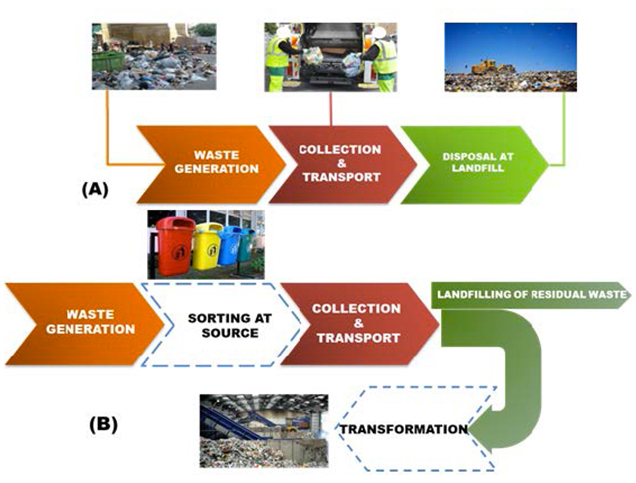
Title: Chain of current solid waste management; (B) Value chain of integrated solid waste management.
Source: Click Here
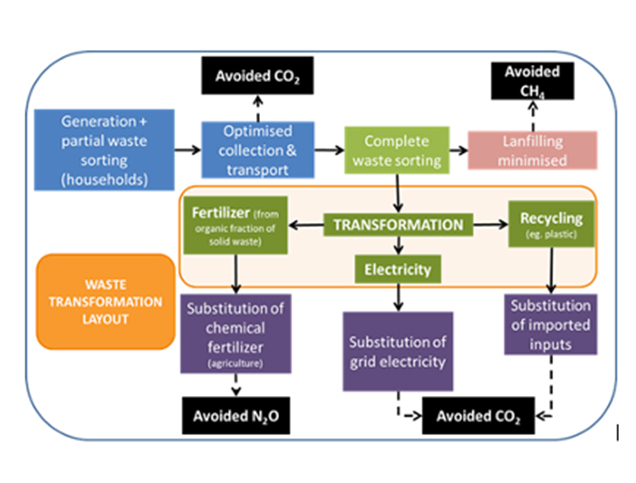
Title: Integrated solid waste management value chain.
Source: Click Here
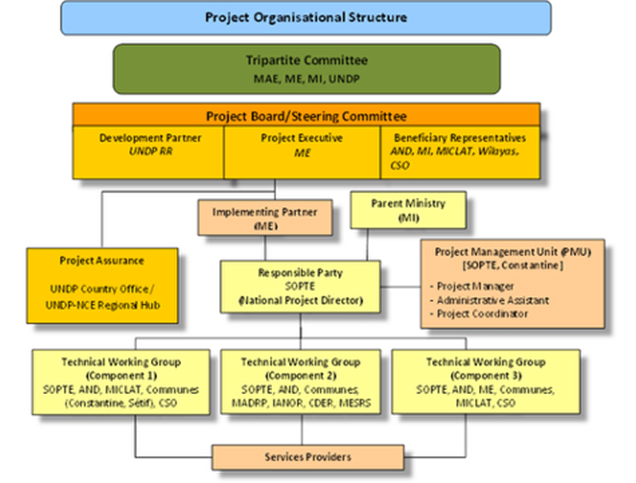
Title: Organizational structure of the project.
Source: Click Here
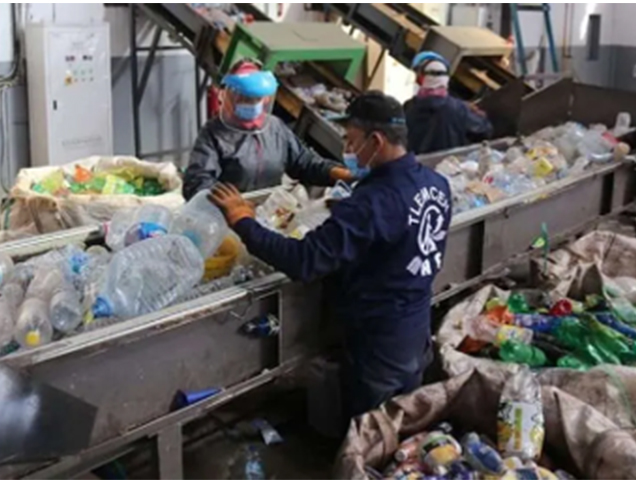
Title: workers during sorting the waste as initial step for recycling process.
Source: Click Here
Title: Chain of current solid waste management; (B) Value chain of integrated solid waste management.
Source: Click Here
Title: Integrated solid waste management value chain.
Source: Click Here
Title: Organizational structure of the project.
Source: Click Here
Title: workers during sorting the waste as initial step for recycling process.
Source: Click Here
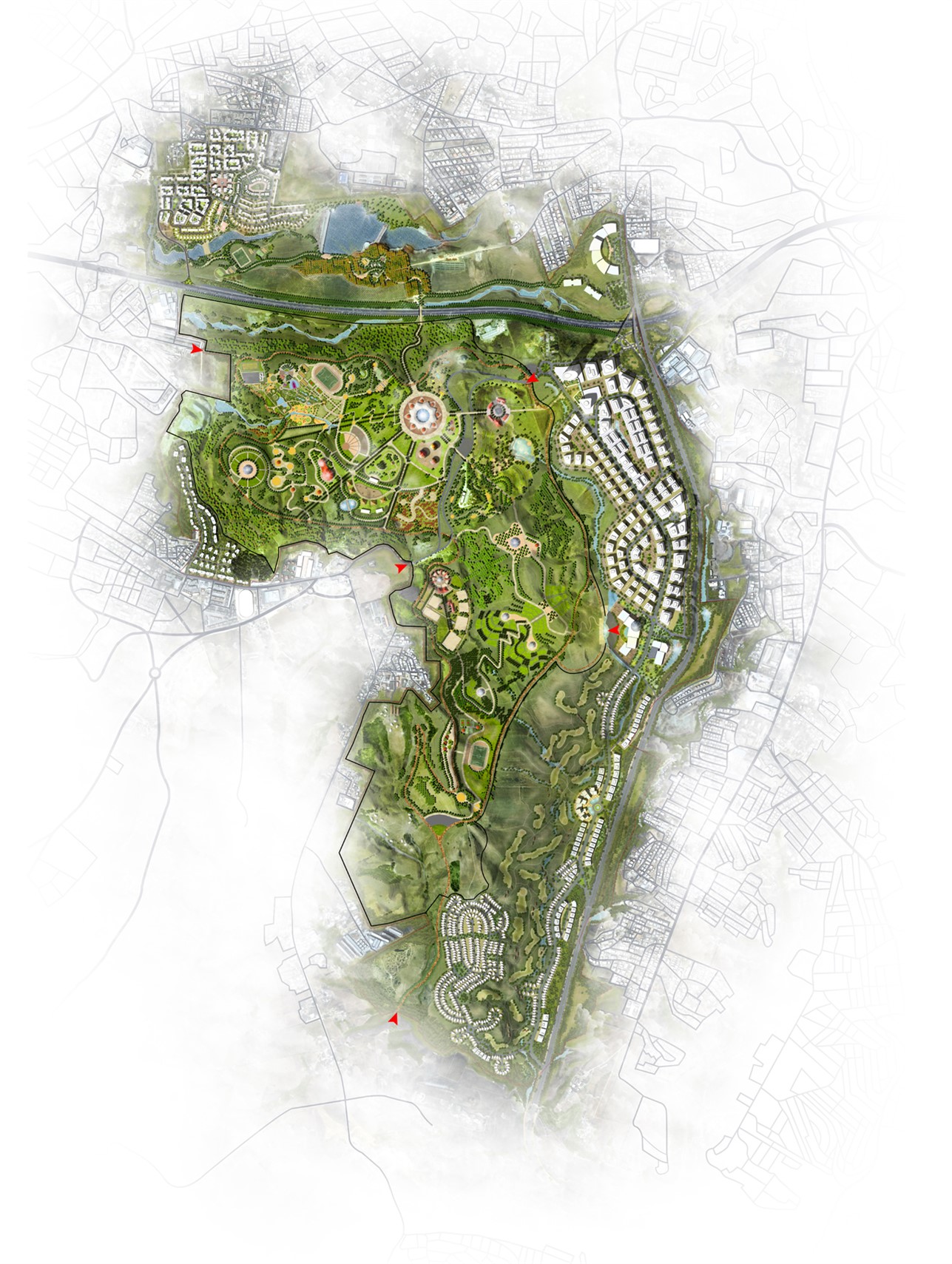
To implement this vision, the AIM-WELL project is structured through a master plan for Constantine and Sétif, which together produce 500 tons of waste per day. The plan introduces a scalable model of WtE with the progressive expansion across phases.
Key facilities and metrics of the plan include:10

The project is managed through national, international and private stakeholders. The Ministry of Environment and Renewable Energy of Algeria serves as the executing partner, while United Nations Development Programme (UNDP) acts as the Global Environment Facility (GEF) implementing agency. The private sector is represented by SOPTE, a subsidiary of Divindus Group,16 contributing a USD 38.5 million equity investment. Internationally, the Deutsche Gesellschaft für Internationale Zusammenarbeit (GIZ) supports the project by providing technical assistance and advancing circular economy initiatives.17 18
The AIM-WELL plan unfolds through three progressive phases:19
Currently, the project is implementation phase, according to the GEF project portal.23 Upon completion, AIM-WELL will serve as Algeria’s model for integrated WtE systems, advancing national sustainability goals and circular economy practices.24
Project Link
https://www.thegef.org/projects-operations/projects/10080
Endnotes
References
An online library where you can explore relevant data on urban development in the Arab cities.
More



Lorem ipsum dolor sit amet consectetur. Lacus nibh neque erat massa elementum. Ultricies ante sed sed nunc massa ider.
Last updated 3 mins ago
Lorem ipsum dolor sit amet consectetur. Lacus nibh neque erat massa elementum. Ultricies ante sed sed nunc massa ider.
Last updated 3 mins ago
Lorem ipsum dolor sit amet consectetur. Lacus nibh neque erat massa elementum. Ultricies ante sed sed nunc massa ider.
Last updated 3 mins ago
Lorem ipsum dolor sit amet consectetur. Lacus nibh neque erat massa elementum. Ultricies ante sed sed nunc massa ider.
Last updated 3 mins ago
Lorem ipsum dolor sit amet consectetur. Lacus nibh neque erat massa elementum. Ultricies ante sed sed nunc massa ider.
Last updated 3 mins ago
Lorem ipsum dolor sit amet consectetur. Lacus nibh neque erat massa elementum. Ultricies ante sed sed nunc massa ider.
Last updated 3 mins ago