Close
Approach Words: Environment Preservation, Sustainability
Public Policy Instruments: Organization, Planning
The KAUST Circular Carbon Initiative (CCI) is a research and development program launched in 2020 by King Abdullah University of Science and Technology (KAUST) in Thuwal, Saudi Arabia.1 It is designed to advance the circular carbon economy through the four pillars of reducing, reusing, recycling, and removing carbon.2 This initiative supports Saudi Arabia’s national climate strategy, including its 2060 net-zero pledge, while contributing to Vision 2030’s sustainability objectives.3 4
Its vision is “to reduce greenhouse gas emissions by 278 million tons annually by 2030”.5 CCI aims to position Saudi Arabia as a global leader in carbon management by integrating research, industrial partnerships, and policy frameworks.6
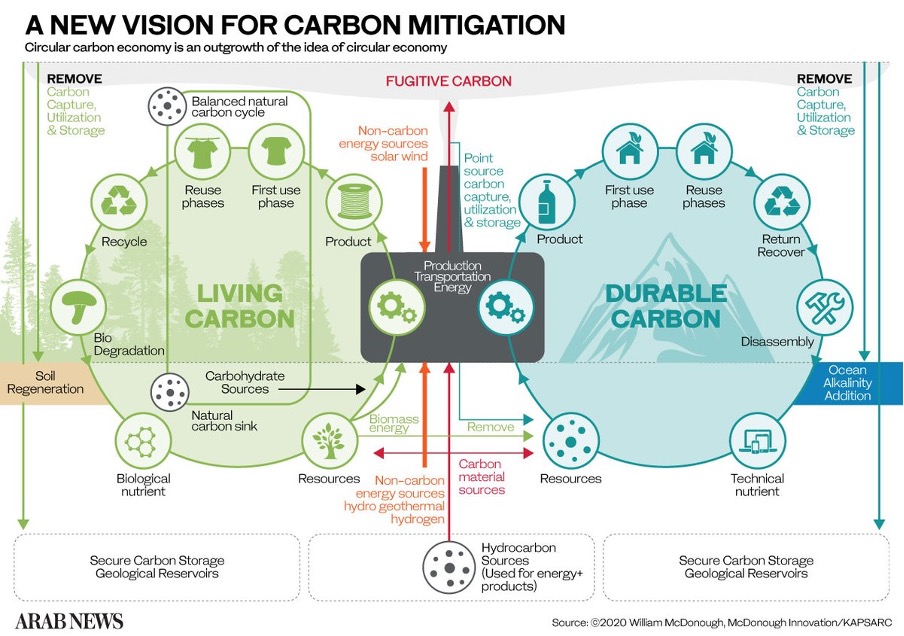
Title: The KAUST Circular Carbon Initiative's vision is to mitigate emissions by treating captured CO₂ as a valuable feedstock for a new, circular carbon economy.
Source: Click Here
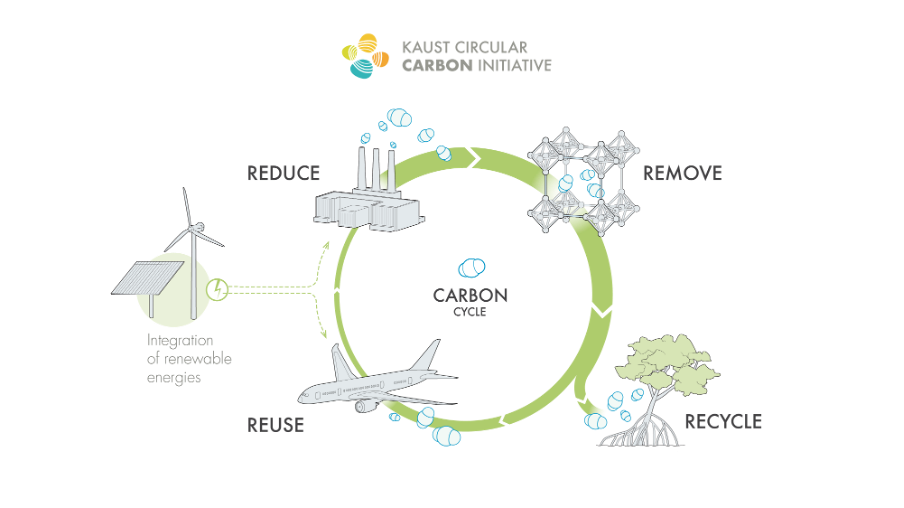
Title: Conceptual framework of the KAUST Circular Carbon Initiative.
Source: Click Here
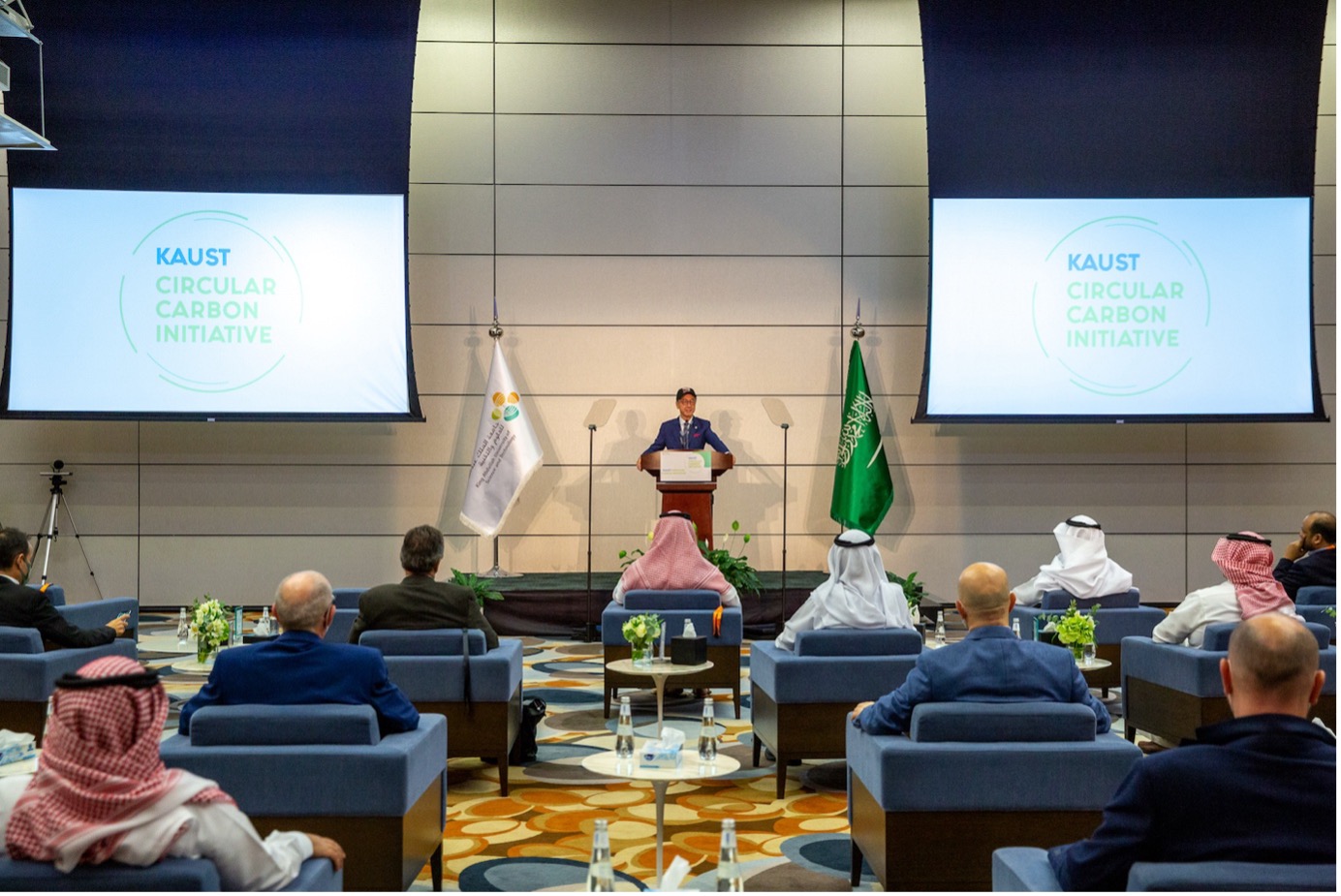
Title: Professor Tony Chan, President of KAUST, inaugurating the Circular Carbon Initiative in December 2020. The event convened national stakeholders to advance research into a circular carbon economy.
Source: Click Here
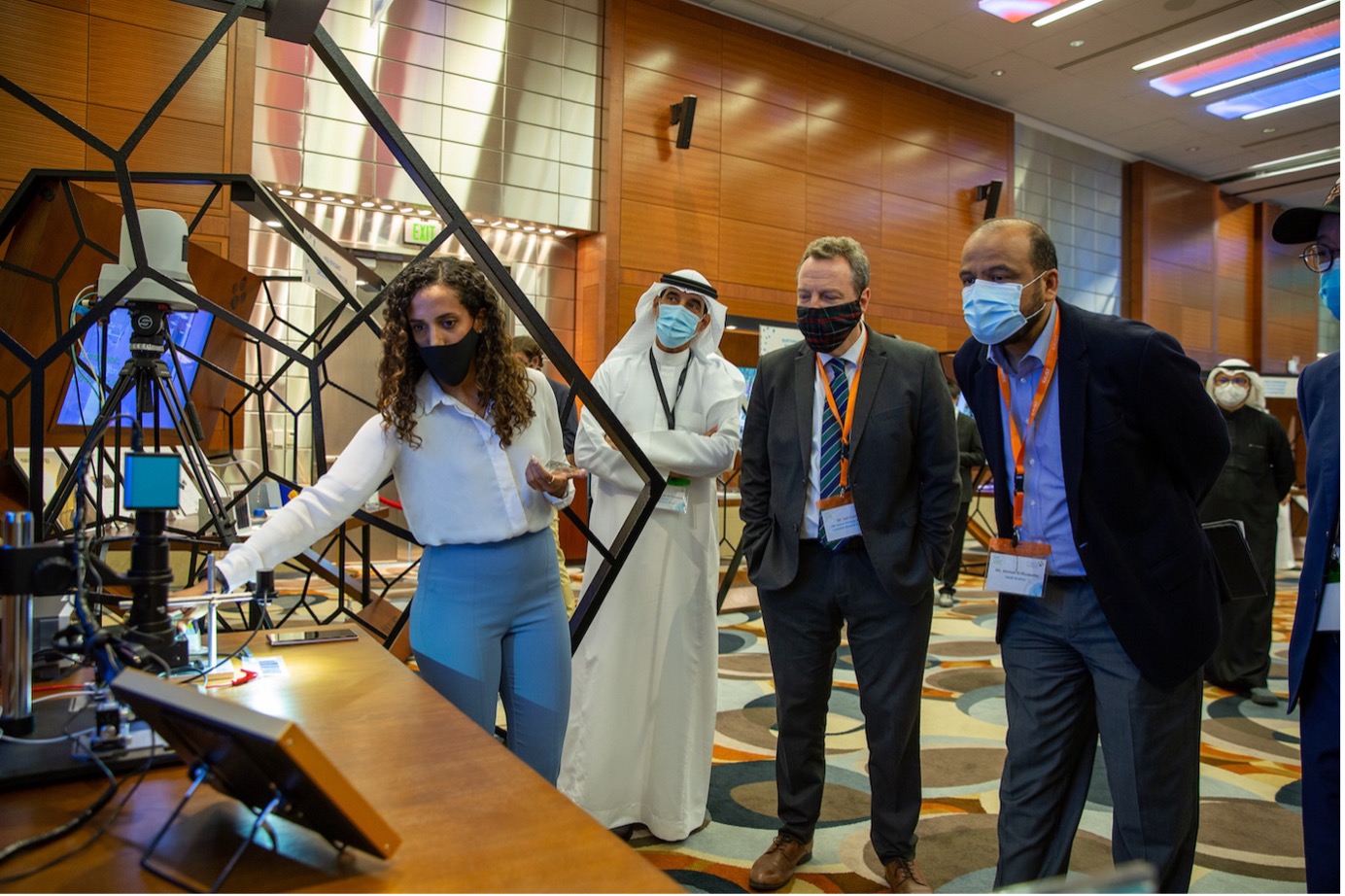
Title: A KAUST researcher demonstrates a solar-powered hydrogen production system, developed in Professor Thomas Anthopoulos's group, to key stakeholders from government and industry.
Source: Click Here
Title: The KAUST Circular Carbon Initiative's vision is to mitigate emissions by treating captured CO₂ as a valuable feedstock for a new, circular carbon economy.
Source: Click Here
Title: Conceptual framework of the KAUST Circular Carbon Initiative.
Source: Click Here
Title: Professor Tony Chan, President of KAUST, inaugurating the Circular Carbon Initiative in December 2020. The event convened national stakeholders to advance research into a circular carbon economy.
Source: Click Here
Title: A KAUST researcher demonstrates a solar-powered hydrogen production system, developed in Professor Thomas Anthopoulos's group, to key stakeholders from government and industry.
Source: Click Here
The program encompasses more than 40 research projects and collaborations with Saudi industries.7 Its core components include:
In addition to these technologies, the initiative explores methane recovery and algae-based carbon capture,12 while also investing in workforce development programs to train professionals in circular economy practices.13

Owner/Developer (Public)
King Abdullah University of Science and Technology (KAUST)21

Consultant/Designer

Funder
Owner/Developer (Public)
King Abdullah University of Science and Technology (KAUST)21
Funder
Consultant/Designer
The initiative is led by KAUST in collaboration with the Saudi Ministry of Energy, the King Abdullah Petroleum Studies and Research Center (KAPSARC), and international partners such as the International Energy Agency (IEA).14
Its Implementation is structured in phases:
As of 2024, the initiative has operational projects in NEOM and on the KAUST campus, and it has produced more than 85 peer-reviewed studies since its launch in 2020.19 20
Project Link
Endnotes
N.A.
References
An online library where you can explore relevant data on urban development in the Arab cities.
More



Lorem ipsum dolor sit amet consectetur. Lacus nibh neque erat massa elementum. Ultricies ante sed sed nunc massa ider.
Last updated 3 mins ago
Lorem ipsum dolor sit amet consectetur. Lacus nibh neque erat massa elementum. Ultricies ante sed sed nunc massa ider.
Last updated 3 mins ago
Lorem ipsum dolor sit amet consectetur. Lacus nibh neque erat massa elementum. Ultricies ante sed sed nunc massa ider.
Last updated 3 mins ago
Lorem ipsum dolor sit amet consectetur. Lacus nibh neque erat massa elementum. Ultricies ante sed sed nunc massa ider.
Last updated 3 mins ago
Lorem ipsum dolor sit amet consectetur. Lacus nibh neque erat massa elementum. Ultricies ante sed sed nunc massa ider.
Last updated 3 mins ago
Lorem ipsum dolor sit amet consectetur. Lacus nibh neque erat massa elementum. Ultricies ante sed sed nunc massa ider.
Last updated 3 mins ago