Close
Approach Words: Environment Preservation, Sustainability, Urban Resilience
Public Policy Instruments: Communicative, Physical Intervention
The Recycling and Clean-Up Community Initiative is a youth-led, community-based effort implemented in Sana’a to address urgent sanitation, waste, and environmental health challenges in a context of limited municipal waste services and protracted crisis.1 Supported through CARE Yemen’s programming, the initiative mobilizes young volunteers to organize neighborhood clean-up campaigns, promotes recycling practices, and raise awareness about safer waste handling and environmental responsibility.2
The initiative’s vision is to “transform waste from an environmental and health hazard into a community resource” through recycling, safe waste collection, and behavioral change. Its aims include reducing unmanaged solid waste in neighborhoods, mitigating health associated with plastic pollution and tire burning, building local capacity for basic recycling practices, and encouraging sustained community participation in environmental stewardship.3
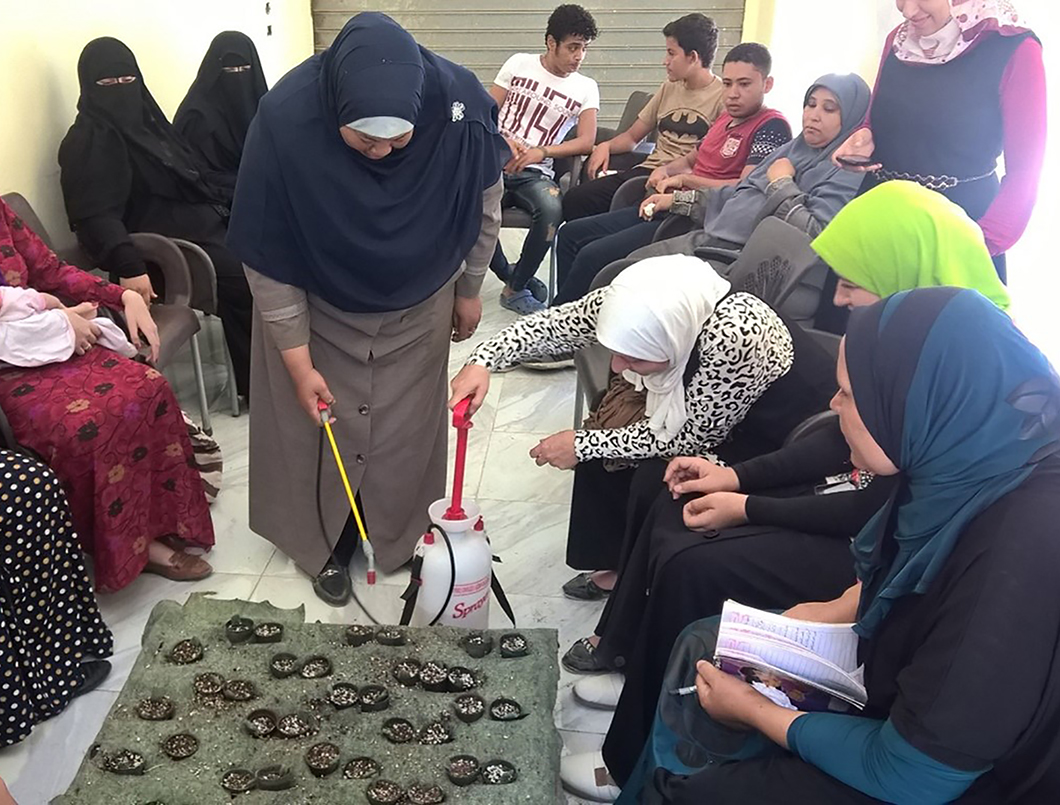
The initiative integrates community mobilization, training, and practical recycling actions through the following components:4
By fostering recycling and community clean-up practices at the neighborhood level, the initiative contributes to reducing unsafe waste disposal, lowering exposure to toxic emissions from burning waste, and improving local environmental conditions. Reduced plastic litter supports cleaner streets, less soil and water contamination, and improved public health awareness. In a setting where formal waste systems are weak or absent, the initiative acts as a catalyst for community-driven environmental resilience and stewardship.5
The initiative is supported by CARE Yemen under the Foundation for Yemen’s Future project, with funding from Reach Out To Asia (ROTA), which enabled training and capacity building for around 75 participants. Youth volunteers from Amanat Al Asimah Governorate play a central role in organizing, implementing, and sustaining activities. While grassroots in nature, the initiative demonstrates how civil society and youth leadership can address environmental challenges in the absence of functioning municipal waste infrastructure.6
Launched in 2021, the Recycling and Clean-Up Community Initiative remains ongoing, with activities continuing through periodic clean-ups, awareness campaigns, and informal recycling actions coordinated by local youth groups.
Project Link
Endnotes
N.A.
References
An online library where you can explore relevant data on urban development in the Arab cities.
More








Lorem ipsum dolor sit amet consectetur. Lacus nibh neque erat massa elementum. Ultricies ante sed sed nunc massa ider.
Last updated 3 mins ago
Lorem ipsum dolor sit amet consectetur. Lacus nibh neque erat massa elementum. Ultricies ante sed sed nunc massa ider.
Last updated 3 mins ago
Lorem ipsum dolor sit amet consectetur. Lacus nibh neque erat massa elementum. Ultricies ante sed sed nunc massa ider.
Last updated 3 mins ago
Lorem ipsum dolor sit amet consectetur. Lacus nibh neque erat massa elementum. Ultricies ante sed sed nunc massa ider.
Last updated 3 mins ago
Lorem ipsum dolor sit amet consectetur. Lacus nibh neque erat massa elementum. Ultricies ante sed sed nunc massa ider.
Last updated 3 mins ago
Lorem ipsum dolor sit amet consectetur. Lacus nibh neque erat massa elementum. Ultricies ante sed sed nunc massa ider.
Last updated 3 mins ago