Close
Approach Words: Environment Preservation, Sustainability, Urban Resilience
Public Policy Instruments: Communicative, Organization, Physical Intervention
The Plastic Recycling Initiative is a waste management and women’s livelihood development project launched in Mogadishu in 2025.1 It represents Somalia’s first integrated urban plastic waste into a source of income, especially Internally Displaced People (IDP) communities. The project reframes plastic from nuisance to opportunity, combining a new processing plant with women-led collection network.2
Its vision is to “build a cleaner, circular Mogadishu where plastic is collected, recycled, and re-marketed” by locally led enterprises that advance women’s economic autonomy. The initiative aims to reduce plastic leakage and pollution, generate dignified livelihoods for women collectors and micro-entrepreneurs; strengthen skills in waste collection, sorting, and segregation; and align local action with Somalia’s policies on plastic waste management, especially following the single-use plastics (SUP) ban announced in June 2024.3 4

Title: Women recyclers in Mogadishu prepare for a day of collecting and sorting plastic at an IRiS-King Plastic site, part of Save the Children’s circular-economy initiative.
Source: Click Here
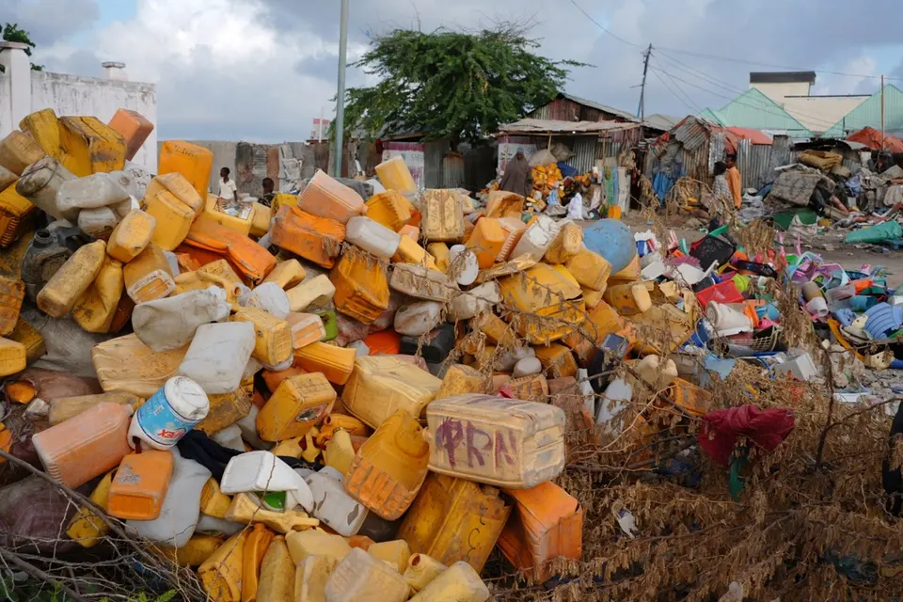
Title: Plastic waste piled for sorting at Mogadishu’s recycling hub, turning litter into feedstock.
Source: Click Here
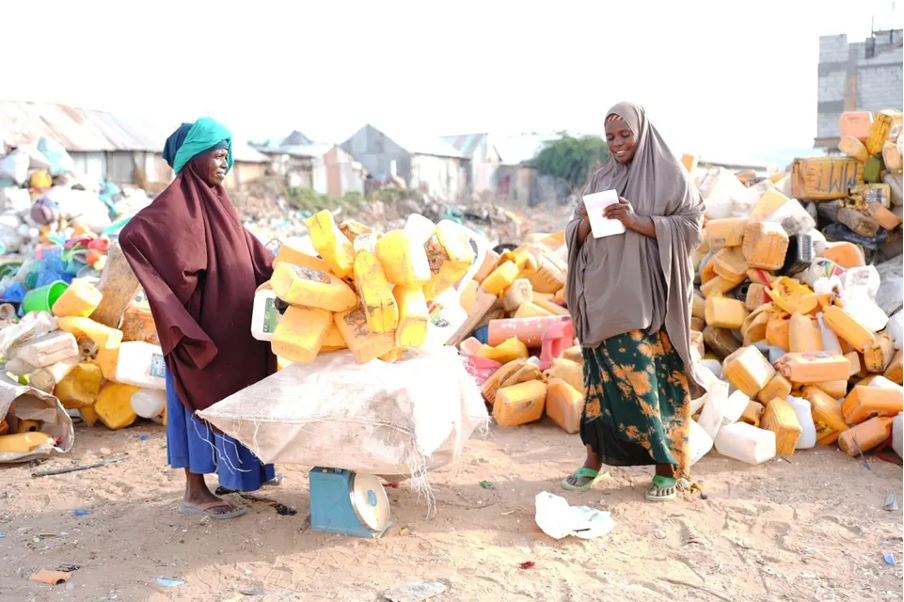
Title: A recycler weighs a customer’s collected plastics at a neighborhood collection center in Mogadishu.
Source: Click Here
Title: Women recyclers in Mogadishu prepare for a day of collecting and sorting plastic at an IRiS-King Plastic site, part of Save the Children’s circular-economy initiative.
Source: Click Here
Title: Plastic waste piled for sorting at Mogadishu’s recycling hub, turning litter into feedstock.
Source: Click Here
Title: A recycler weighs a customer’s collected plastics at a neighborhood collection center in Mogadishu.
Source: Click Here
To implement this vision, the initiative operates through an integrated model connecting processing, collection, and market linkages. Key components include:5 6
Through these tools, the project reduces plastic pollution across streets and coastlines, supports marine and urban ecosystems, and channels waste into productive economic uses.7


The initiative is implemented under Save the Children’s Inclusive Resilience in Somalia (IRiS)i program in partnership with King Plastic.8 Primary beneficiaries are women from IDP communities, who receive training, fair payment, and opportunities to operate as micro-entrepreneurs. Other participants include local residents who contribute recyclable materials, private recyclers who ensure market stability, and media and civil-society partners who document progress and promote replication across Mogadishu.9
The initiative builds trust through community-based collection and predictable payments, fostering visible environment improvement within the urban circular-economy.10
Project Link
Endnotes
References
An online library where you can explore relevant data on urban development in the Arab cities.
More



Lorem ipsum dolor sit amet consectetur. Lacus nibh neque erat massa elementum. Ultricies ante sed sed nunc massa ider.
Last updated 3 mins ago
Lorem ipsum dolor sit amet consectetur. Lacus nibh neque erat massa elementum. Ultricies ante sed sed nunc massa ider.
Last updated 3 mins ago
Lorem ipsum dolor sit amet consectetur. Lacus nibh neque erat massa elementum. Ultricies ante sed sed nunc massa ider.
Last updated 3 mins ago
Lorem ipsum dolor sit amet consectetur. Lacus nibh neque erat massa elementum. Ultricies ante sed sed nunc massa ider.
Last updated 3 mins ago
Lorem ipsum dolor sit amet consectetur. Lacus nibh neque erat massa elementum. Ultricies ante sed sed nunc massa ider.
Last updated 3 mins ago
Lorem ipsum dolor sit amet consectetur. Lacus nibh neque erat massa elementum. Ultricies ante sed sed nunc massa ider.
Last updated 3 mins ago