Close
Approach Words: Capacity Building, Comprehensive Management, Sustainability
Public Policy Instruments: Organization, Physical Intervention, Planning
The Waste Wise Cities Tool (WaCT) is an data-driven developed as part of the African Clean Cities Program (ACCP),i to promote sustainable solid waste management in cities, particularly across Africa. It helps municipalities identify policy gaps and infrastructure need to enhance waste collection, treatment, and recycling systems.1 In April 2021, Sousse, Tunisia joined the Waste Wise Cities Program with the vision of “improving urban cleanliness and transforming its waste management system”.2
The initiative aims to establish an integrated, inclusive, and sustainable municipal solid waste (MSW) management system in Sousse. It promotes multi-stakeholder collaboration, engaging civil society, NGOs, private companies, and informal workers to strengthen coordination along the waste value chain. Key goals include enhancing working conditions for both formal and informal waste collectors, adopting waste-to-energy (WtE) solutions, reducing overall waste generation, and promoting circular economy principles through financial innovative incentives.3
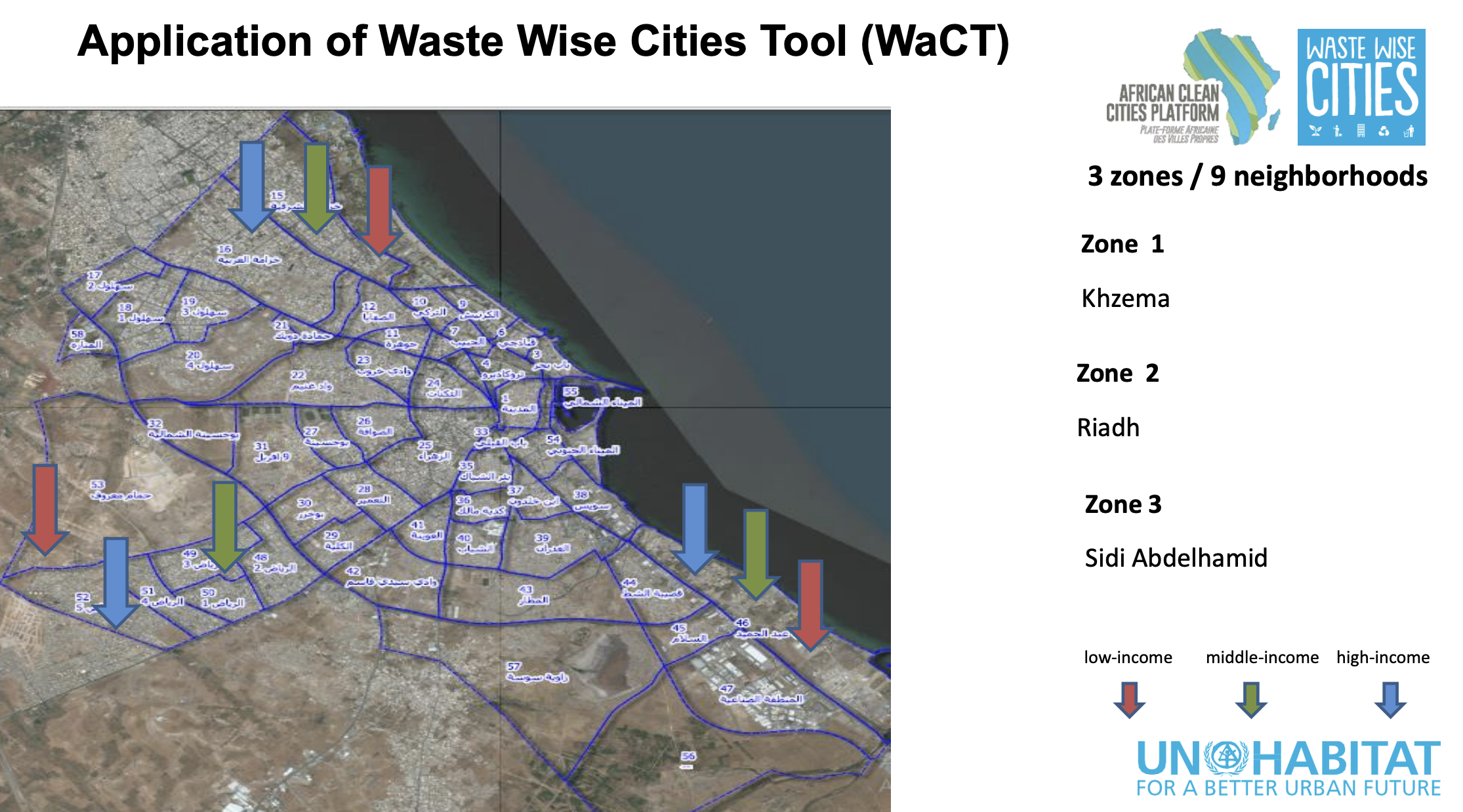
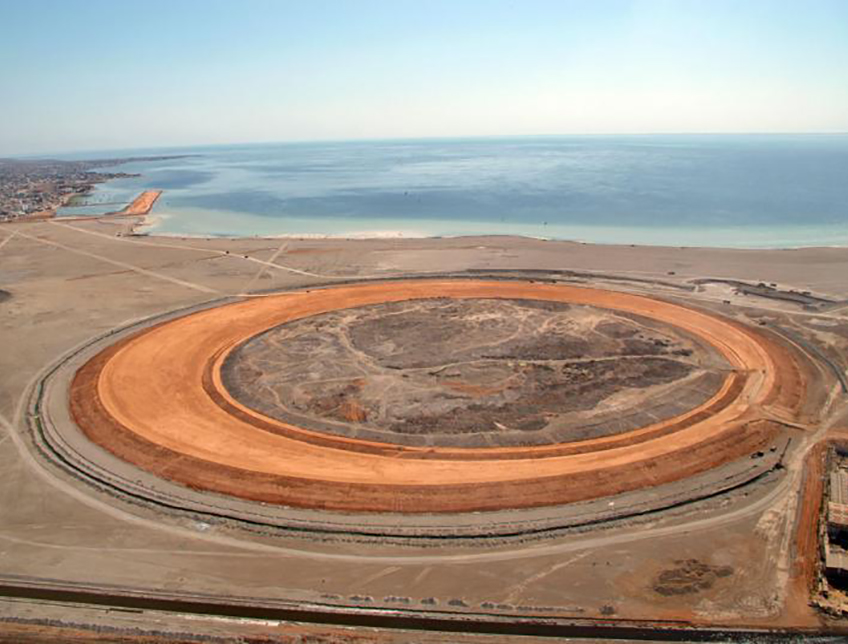
Title: Map Showing Locations of WaCT Implementation in Sousse.
Source: Click Here
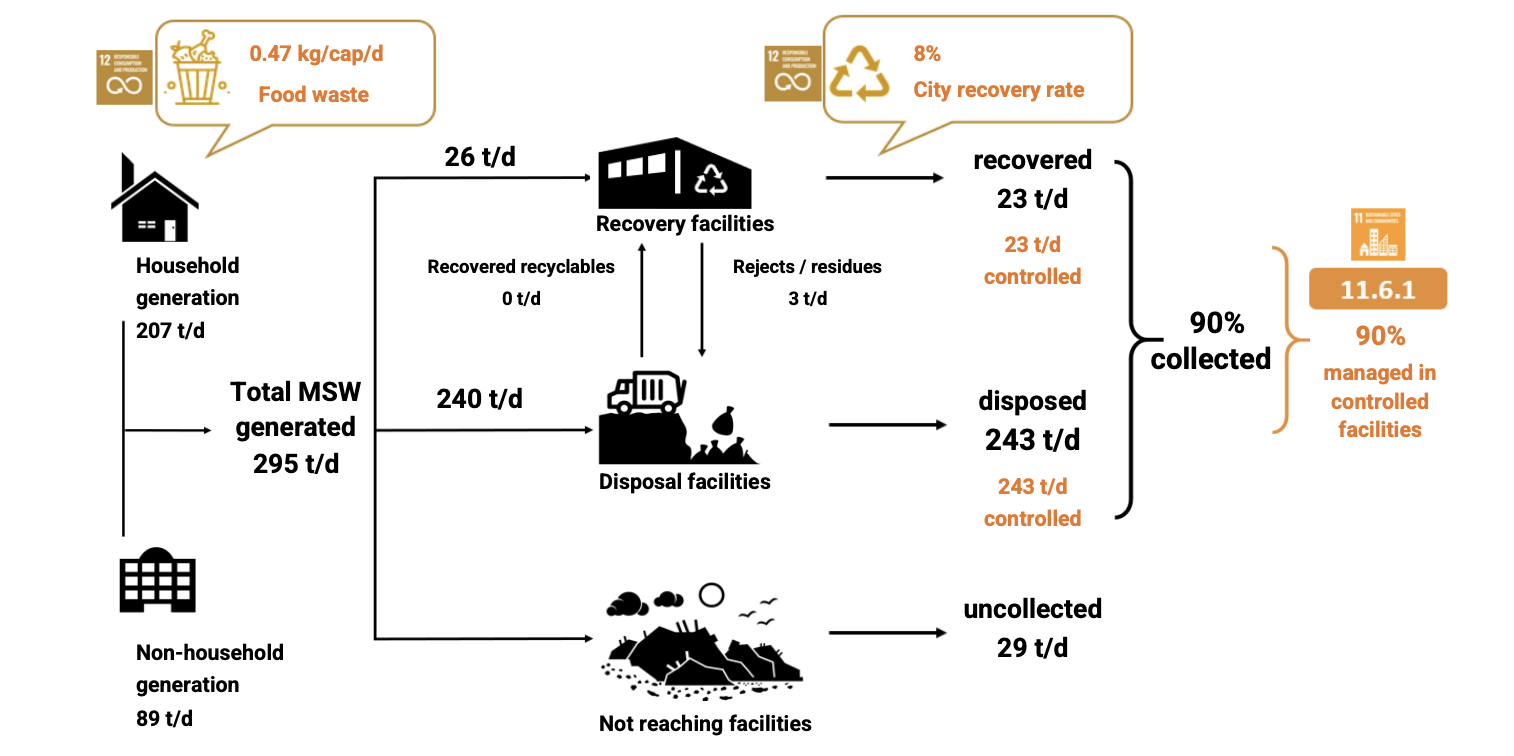
Title: WaCT Waste Flow Chart in Sousse.
Source: Click Here
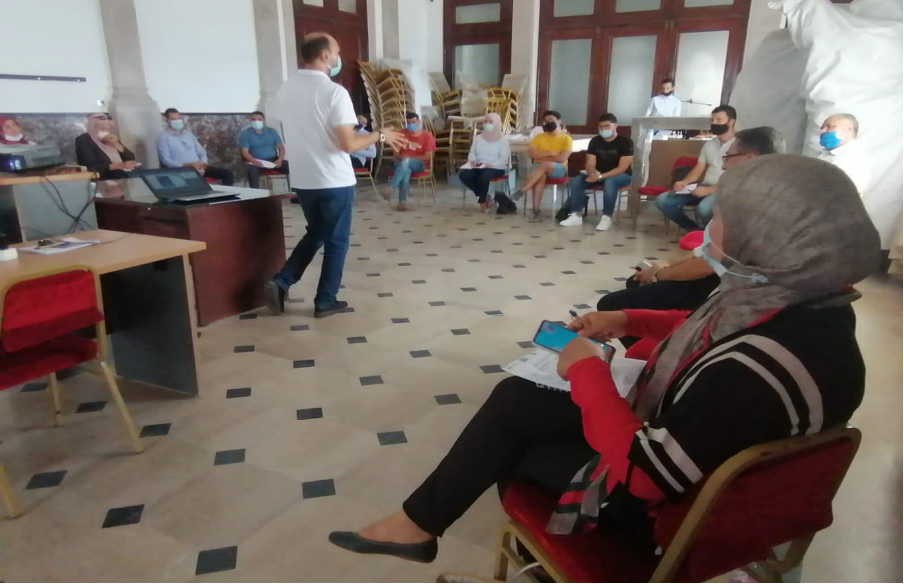
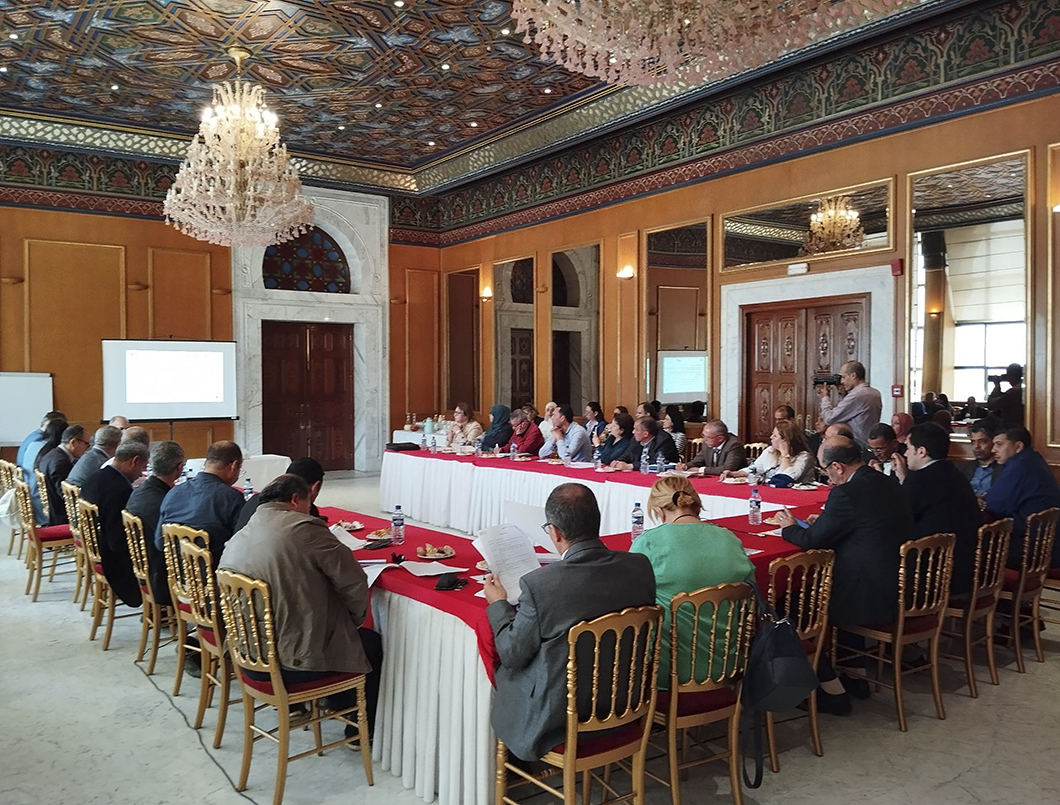
Title: Capacity Building Workshops.
Source: Click Here
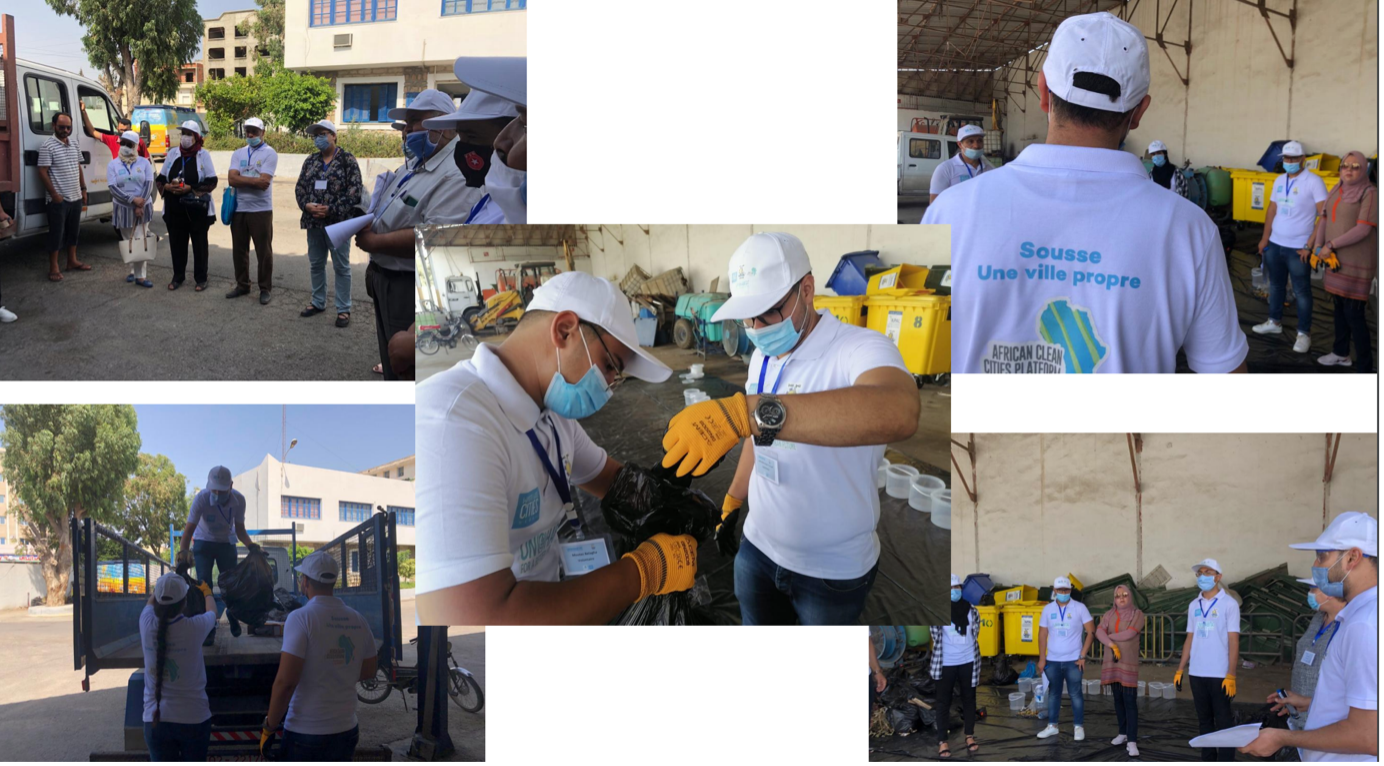
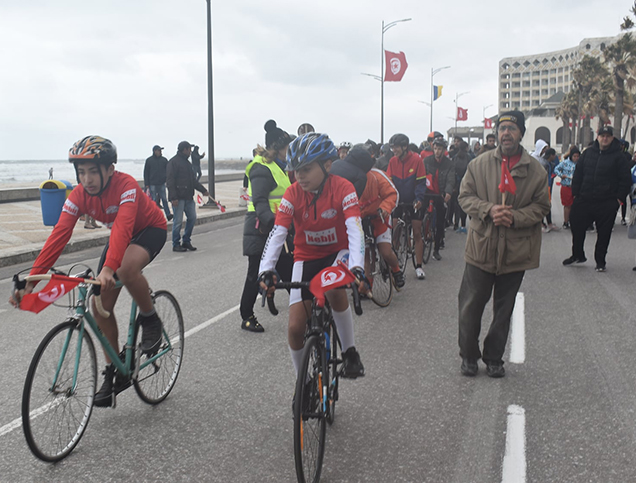
Title: WaCT Implementation Activities in Sousse.
Source: Click Here
Title: Map Showing Locations of WaCT Implementation in Sousse.
Source: Click Here
Title: WaCT Waste Flow Chart in Sousse.
Source: Click Here
Title: Capacity Building Workshops.
Source: Click Here
Title: WaCT Implementation Activities in Sousse.
Source: Click Here
WaCT guides cities through a seven-step process for data collection and analysis on MSW:4
The WaCT implementation in Sousse emphasized improving the status of informal waste collectors, locally known as “Barbechas.”5 A detailed needs assessment involving approximately 1,500 workers informed targeted actions to enhance their working conditions and equip them with tools for efficient plastic waste collection and sorting.6
In parallel, UN-Habitat Tunisia provided technical support and organized workshops to build municipal capacity in sustainable waste management and to guide future waste-related projects.7

Owner/Developer (Public)

Contractor/Implementer
Owner/Developer (Public)
Contractor/Implementer
The WaCT assessment provided Sousse with a clear understanding of its waste management system, revealing key policy, infrastructure gaps, and priority intervention area. Based on this data, the city will develop a targeted action plan aimed at improving MSW management in Sousse.8
The initiative was launched through a multi-stakeholder collaboration between the Ministry of the Environment of Japan (MoEJ), the Japan International Cooperation Agency (JICA), the City of Yokohama, the United Nations Environment Programme (UNEP), and the United Nations Human Settlements Programme (UN-Habitat), in partnership with the Municipality of Sousse.9
Project Link
Endnotes
References
An online library where you can explore relevant data on urban development in the Arab cities.
More


Lorem ipsum dolor sit amet consectetur. Lacus nibh neque erat massa elementum. Ultricies ante sed sed nunc massa ider.
Last updated 3 mins ago
Lorem ipsum dolor sit amet consectetur. Lacus nibh neque erat massa elementum. Ultricies ante sed sed nunc massa ider.
Last updated 3 mins ago
Lorem ipsum dolor sit amet consectetur. Lacus nibh neque erat massa elementum. Ultricies ante sed sed nunc massa ider.
Last updated 3 mins ago
Lorem ipsum dolor sit amet consectetur. Lacus nibh neque erat massa elementum. Ultricies ante sed sed nunc massa ider.
Last updated 3 mins ago
Lorem ipsum dolor sit amet consectetur. Lacus nibh neque erat massa elementum. Ultricies ante sed sed nunc massa ider.
Last updated 3 mins ago
Lorem ipsum dolor sit amet consectetur. Lacus nibh neque erat massa elementum. Ultricies ante sed sed nunc massa ider.
Last updated 3 mins ago