Close
Approach Words: Efficiency, Sustainability, Urban Livability
Public Policy Instruments: Physical Intervention, Planning
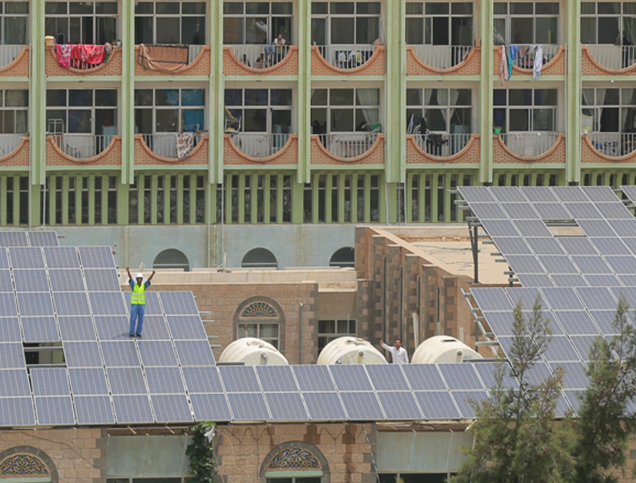
The ASCENT Sudan project is a World Bank approved operation under the regional ASCENT multi-phase programmatic approach, designed to expand access to electricity and digital services in selected Sudanese states while supporting resilience and early recovery in a conflict affected context.1 It is explicitly framed as Phase 11 of the regional ASCENT program and contributes to Mission 300, an Africa wide initiative to connect 300 million people to electricity by 2030.2 3
The project’s vision is to close urgent gaps in power and connectivity so communities and local economies can function, recover, and grow.4 It aims to expand electricity access for households and enable improved delivery of basic services such as healthcare and education, while also supporting jobs through renewable energy employment, digital skills training, and better electricity and connectivity for small businesses and productive uses such as solar powered irrigation and food processing.5
ASCENT Sudan combines distributed renewable energy deployment with targeted support for telecom connectivity and productive uses, delivered through private sector-oriented mechanisms that promote long term operability. 6 Project components include: 7 8

Owner/Developer

Funder

Contractor/Implementer
Owner/Developer
Contractor/Implementer
Funder
By prioritizing renewable energy systems and private sector models that strengthen maintenance and durability, the project is designed to deliver cleaner power, reduce reliance on costly and fragile supply arrangements, and improve resilience of essential services in a conflict and displacement context.9 It also aligns with the World Bank’s approach to fragility, conflict, and violence settings, emphasizing continuity of critical services and resilience building during crises.10 11
The World Bank (IDA) provides financing for the project, and the Eastern and Southern African Trade and Development Bank (TDB) is named as the recipient and implementing agency.12 The program uses an RBF mechanism to mobilize private sector delivery, with coordination support through the COMESA ASCENT platform for stakeholder alignment and knowledge exchange.13 14
Project Link
Endnotes
N.A.
References
An online library where you can explore relevant data on urban development in the Arab cities.
More


Lorem ipsum dolor sit amet consectetur. Lacus nibh neque erat massa elementum. Ultricies ante sed sed nunc massa ider.
Last updated 3 mins ago
Lorem ipsum dolor sit amet consectetur. Lacus nibh neque erat massa elementum. Ultricies ante sed sed nunc massa ider.
Last updated 3 mins ago
Lorem ipsum dolor sit amet consectetur. Lacus nibh neque erat massa elementum. Ultricies ante sed sed nunc massa ider.
Last updated 3 mins ago
Lorem ipsum dolor sit amet consectetur. Lacus nibh neque erat massa elementum. Ultricies ante sed sed nunc massa ider.
Last updated 3 mins ago
Lorem ipsum dolor sit amet consectetur. Lacus nibh neque erat massa elementum. Ultricies ante sed sed nunc massa ider.
Last updated 3 mins ago
Lorem ipsum dolor sit amet consectetur. Lacus nibh neque erat massa elementum. Ultricies ante sed sed nunc massa ider.
Last updated 3 mins ago