Close
Approach Words: Environment Preservation, Sustainability, Urban Resilience
Public Policy Instruments: Financial Mechanism, Physical Intervention
The Sulaibiya Wastewater Treatment and Reclamation Plant (SWTRP) is a large-scale municipal wastewater-reuse facility located about 25 kilometers west of Kuwait City.1 It is one of the world’s largest membrane-based wastewater-treatment plants and a global benchmark for advanced water-reuse.2
Its vision is “to bolster Kuwait’s water security” by converting wastewater into high-quality reclaimed water for industrial and agricultural applications, hence supporting circular water use, reducing reliance on desalination, and mitigating environmental harmful discharge.3 4
The plant seeks to treat a major share of the Kuwait’s domestic wastewater, improveenergy efficiency, and promote private-sector participation in service delivery.5 6 The plant also aims to demonstrate the integration of advanced ultrafiltration (UF) and reverse-osmosis (RO) technologies in large-scale water reclamation.7
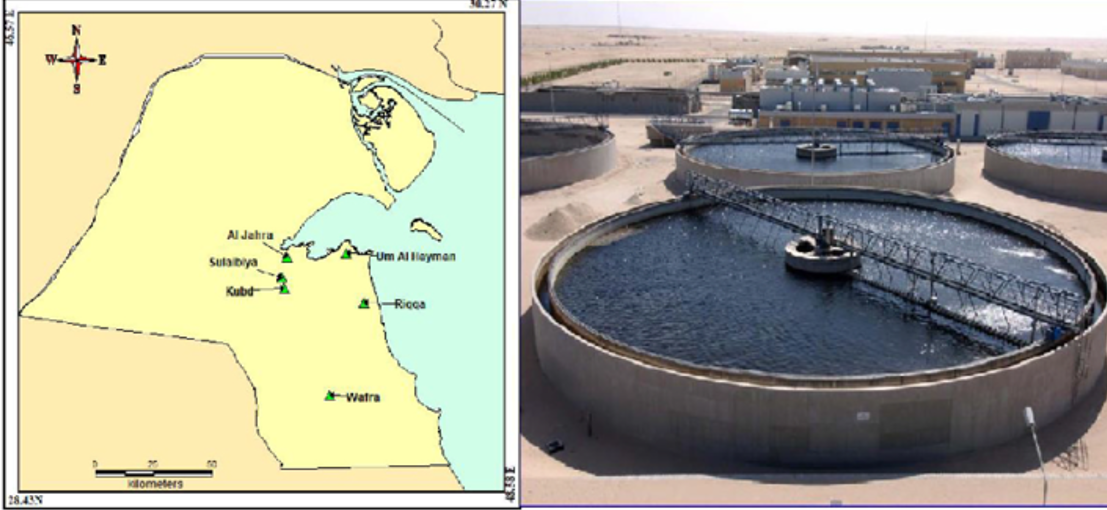
Title: Location of Sulaibiya wastewater treatment and reclamation plant (SWTRP) in Kuwait
Source: Click Here
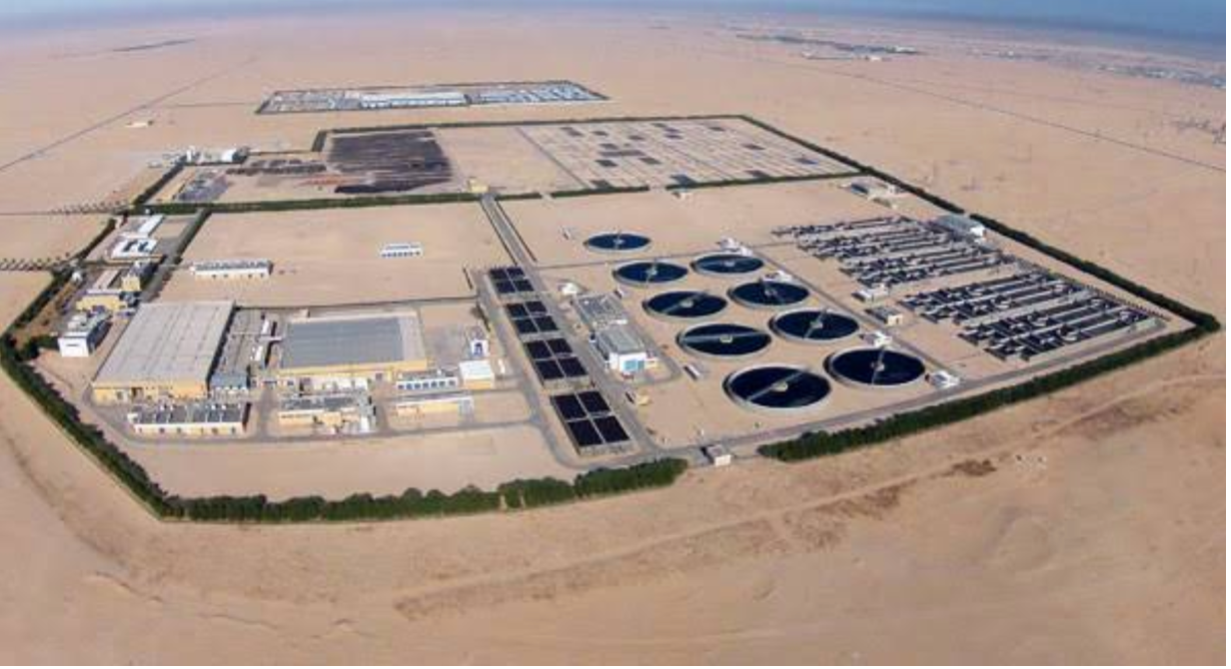
Title: Aerial view of Sulaibiya Wastewater Treatment and Reclamation Plant.
Source: Click Here
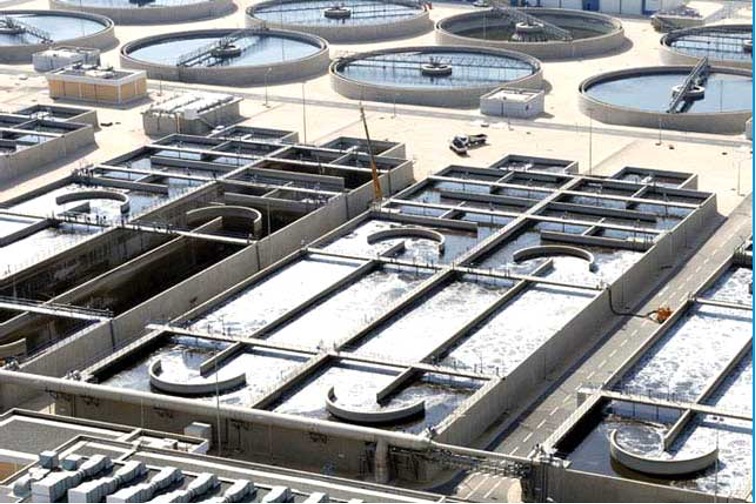
Title: Sulaibiya Wastewater Treatment Plant
Source: Click Here
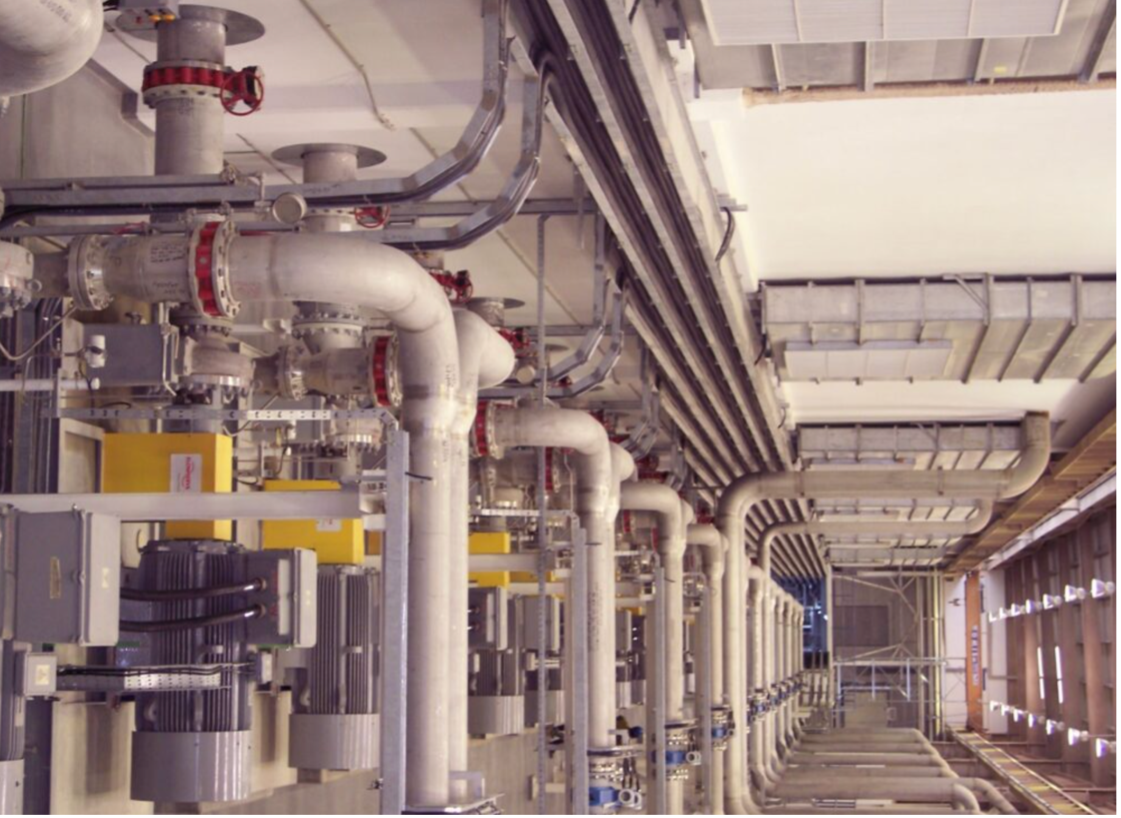
Title: Inside the SWTRP
Source: Click Here
Title: Location of Sulaibiya wastewater treatment and reclamation plant (SWTRP) in Kuwait
Source: Click Here
Title: Aerial view of Sulaibiya Wastewater Treatment and Reclamation Plant.
Source: Click Here
Title: Sulaibiya Wastewater Treatment Plant
Source: Click Here
Title: Inside the SWTRP
Source: Click Here
To implement this vision, SWTRP was developed under a 30-year Build-Operate-Transfer (BOT) concession, awarded in July 2002 by Kuwait’s Ministry of Public Works.8 The project covers the collection of wastewater from Kuwait City, its transfer to the Sulaibiya treatment complex, and tertiary treatment. The system features three 1,400 mm pipelines carrying influent from the Ardiya pumping station to Sulaibiya and an integrated sludge-treatment system.9
The project applies membrane-bioreactor and UF/RO hybrid systems to achieve near-zero discharge of untreated wastewater and reliably produces high quality reclaimed water for reuse in industrial cooling, landscape irrigation and agriculture.10 The BOT-PPP model integrates public oversight with private-sector operational efficiency and performance incentives.11

Owner/Developer (Public)

Owner/Developer (Public)
Key stakeholders comprise the Utilities Development Company (UDC) as concessionaire; Kharafi National as developer; GE Water / SUEZ Water Technologies as technology provider and O&M partner; and the Ministry of Public Works (MPW) as regulator and public-asset owner.12 13
During the 2015 – 2019 expansion phase, executed by GE Water & Process Technologies (later SUEZ Water Technologies & Solutions), the plant incorporated the ZeeWeed 1000 UF and AG LF low-fouling RO elements.14
The facility currently treats 375,000 m³/day, with an expanded capacity to 600,000 m³/day, covering more than 60 % of Kuwait’s municipal wastewater flow.15 16
Project milestones include the BOT concession signing on 7 July 2002,17 commissioning in late 2004 from design to construction (29 months),18 and the capacity upgrade to 600,000 m³/day completed in 2019.19
SWTRP will remain under private operation until 2032, after which ownership will transfer to the State of Kuwait.20 Ater long term, the Sulaibiya facility is expected to continue functioning as a national and regional model of public-private partnership (PPP) in sustainable wastewater infrastructure and circular-economy water-management practices.21
Project Link
Endnotes
N.A.
References
An online library where you can explore relevant data on urban development in the Arab cities.
More



Lorem ipsum dolor sit amet consectetur. Lacus nibh neque erat massa elementum. Ultricies ante sed sed nunc massa ider.
Last updated 3 mins ago
Lorem ipsum dolor sit amet consectetur. Lacus nibh neque erat massa elementum. Ultricies ante sed sed nunc massa ider.
Last updated 3 mins ago
Lorem ipsum dolor sit amet consectetur. Lacus nibh neque erat massa elementum. Ultricies ante sed sed nunc massa ider.
Last updated 3 mins ago
Lorem ipsum dolor sit amet consectetur. Lacus nibh neque erat massa elementum. Ultricies ante sed sed nunc massa ider.
Last updated 3 mins ago
Lorem ipsum dolor sit amet consectetur. Lacus nibh neque erat massa elementum. Ultricies ante sed sed nunc massa ider.
Last updated 3 mins ago
Lorem ipsum dolor sit amet consectetur. Lacus nibh neque erat massa elementum. Ultricies ante sed sed nunc massa ider.
Last updated 3 mins ago