Close
Approach Words: Environment Preservation, Sustainability, Urban Livability
Public Policy Instruments: Physical Intervention
The Beni Nadji Raw Water Pretreatment Station is a rapid-delivery water-security upgrade, in Trarza region, designed to stabilize Nouakchott’s potable-water supply by treating highly turbid raw water from the Senegal River before it enters the main treatment and conveyance system.1
The project envisions “ensuring continuous, safe drinking-water supply” for Nouakchott, even during peak rainy-season turbidity events, by introducing a dedicated high-capacity pretreatment stage capable of handling extreme sediment and suspended-solids loads.2 The project seeks to reduce supply interruptions, improve treatment reliability, and lower public-health risks associated with untreated or inadequately treated water during flood and rainy seasons. It serves the entire Nouakchott metropolitan area, where turbidity spikes have historically caused prolonged service disruptions.3 4
To implement this vision, the project bundles pretreatment process units and supporting facilities to increase treatment robustness and operational control:5 6 7
The project advances climate resilience, public-health protection, and operational sustainability by stabilizing treatment performance during extreme weather events. Its robust design reduces system failures, limits emergency shutdowns, and improves long-term reliability under harsh environmental conditions.8 9

Owner/Developer (Public)

Contractor/Implementer
Owner/Developer (Public)
Contractor/Implementer
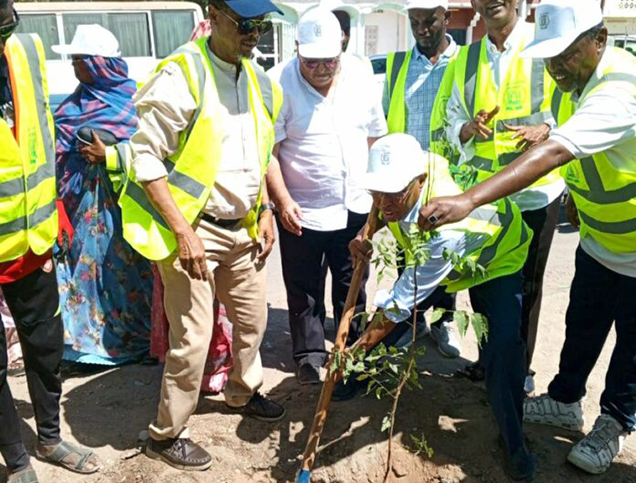
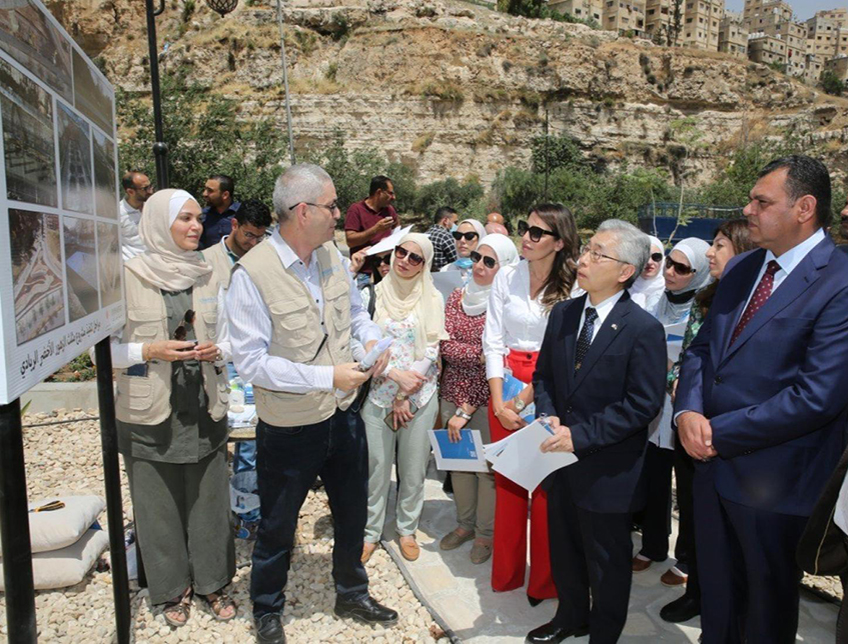
The project is overseen by Mauritania’s Ministry of Hydraulics and Sanitation and implemented with the Société Nationale des Eaux (SNDE) as the operating public utility for Nouakchott’s supply system. Implementation was delivered by Power Construction Corporation of China (POWERCHINA), and the completion ceremony was attended by President Mohamed Ould Ghazouani and Chinese Ambassador Tang Zhongdong, alongside the General Manager of the Société Nationale des Eaux, SNDE.10 11
The is operational and was implemented as a fast-track infrastructure intervention, with construction completed and the facility brought into operation by 2024. Official commissioning was attended by national leadership.12 13
Project Link
Endnotes
N.A.
References
An online library where you can explore relevant data on urban development in the Arab cities.
More

Lorem ipsum dolor sit amet consectetur. Lacus nibh neque erat massa elementum. Ultricies ante sed sed nunc massa ider.
Last updated 3 mins ago
Lorem ipsum dolor sit amet consectetur. Lacus nibh neque erat massa elementum. Ultricies ante sed sed nunc massa ider.
Last updated 3 mins ago
Lorem ipsum dolor sit amet consectetur. Lacus nibh neque erat massa elementum. Ultricies ante sed sed nunc massa ider.
Last updated 3 mins ago
Lorem ipsum dolor sit amet consectetur. Lacus nibh neque erat massa elementum. Ultricies ante sed sed nunc massa ider.
Last updated 3 mins ago
Lorem ipsum dolor sit amet consectetur. Lacus nibh neque erat massa elementum. Ultricies ante sed sed nunc massa ider.
Last updated 3 mins ago
Lorem ipsum dolor sit amet consectetur. Lacus nibh neque erat massa elementum. Ultricies ante sed sed nunc massa ider.
Last updated 3 mins ago