Close
Approach Words: Environment Preservation, Sustainability, Urban Resilience
Public Policy Instruments: Physical Intervention, Planning
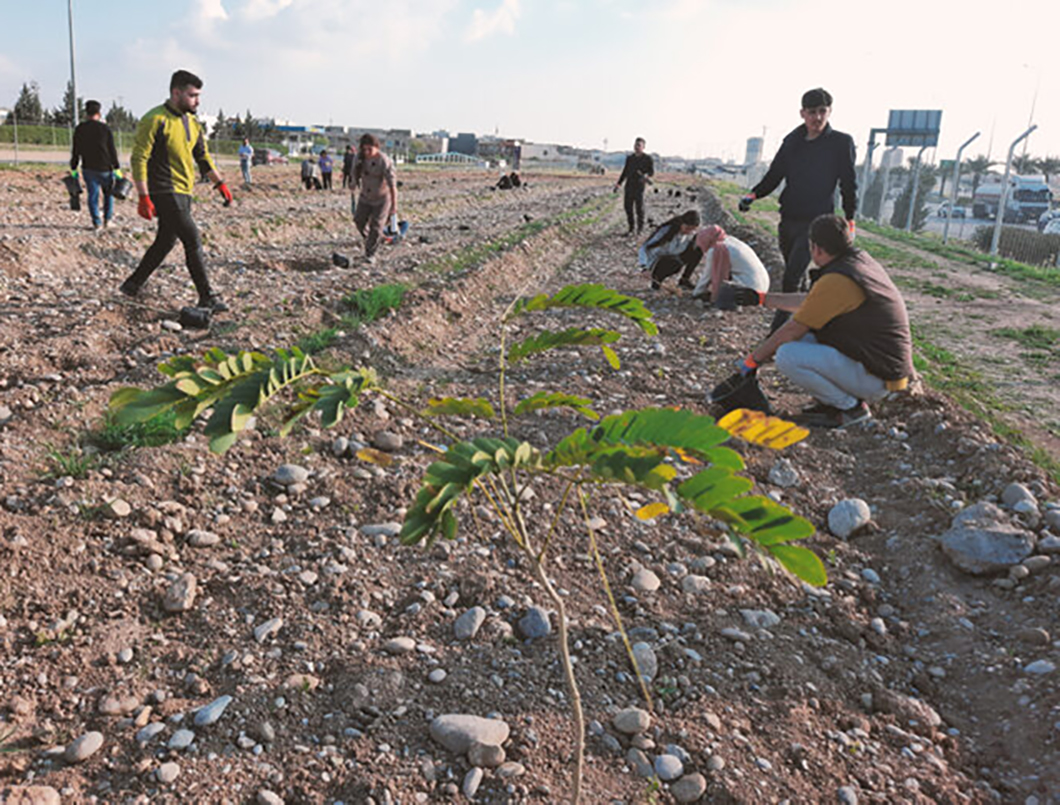
The Eastern Ghouta Climate Resilience and Water Scarcity Adaptation Project is a climate-adaptation and rural recovery programme that integrates water management, wastewater reuse, and climate-smart agriculture to address chronic water scarcity, pollution, and livelihood vulnerability in Eastern Ghouta.1 2
The project envisions climate-resilient rural communities in Eastern Ghouta with safer, more reliable water resources for agriculture and domestic use, while protecting soil and water systems from pollution and long-term degradation. The project seeks to reduce vulnerability to water scarcity and climate stress through an integrated natural resource management (INRM) approach, combining watershed-scale planning, non-conventional water use, irrigation efficiency, and climate-smart agricultural practices.3 4
Its interventions target farming households and water-dependent livelihoods across Eastern Ghouta, a region highly affected by drought, infrastructure damage, and environmental degradation.5
To implement the vision, the project integrates water, wastewater, and agriculture interventions through coordinated implementation. Key components are:
Component 1: Integrated Natural Resource Management (INRM)6 7 8
Component 2: Climate-Resilient Water Supply and Wastewater Management9 10 11
Component 3: Resilient Livelihoods and Climate-Smart Agriculture12 13 14
In terms of sustainability, the project advances water security, pollution reduction, and livelihood resilience by linking wastewater treatment and reuse with efficient irrigation and climate-smart agriculture. This integrated approach protects soil and water resources, reduces untreated wastewater discharge, and stabilizes agricultural production under increasing climate stress.15 16

Owner/Developer (Public)


Funder

Owner/Developer (Public)
Funder
The project is financed by the Adaptation Fund with a total budget of US$10.0 million and is implemented as a joint UN programme. UN-Habitat serves as the lead implementing agency, working in close cooperation with UNDP and FAO, and in partnership with the Ministry of Local Administration and Environment as the national counterpart.17 18 19
The budget is organized around three technical components. Component 1 allocates US$1.54 million to integrated natural resource management. Component 2, the largest investment, assigns US$4.60 million to the development of climate-resilient water supply systems for urban and agricultural uses. Component 3 dedicates US$2.20 million to strengthening the resilience of water-dependent livelihoods. Together, these components account for US$8.34 million. This is complemented by US$875,900 for programme execution costs and an implementing entity management fee of US$783,410, bringing the total project financing to US$10.0 million.20 21 22
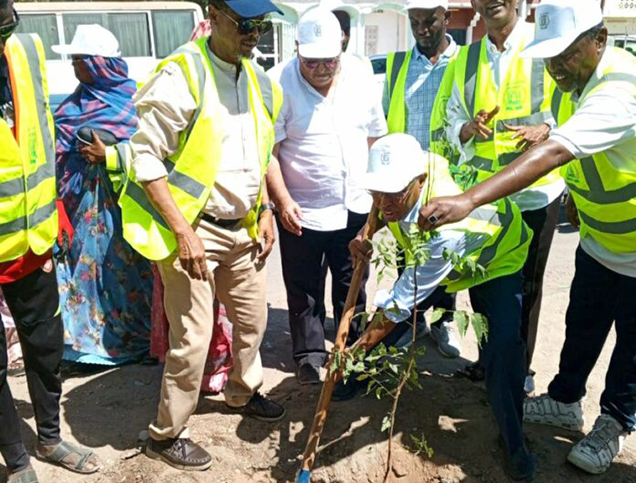
The project was launched in October 2021 with an implementation horizon of approximately 3.5 years. A major milestone was reached in November 2025 with the launch of a model wastewater treatment plant for sustainable agriculture, alongside sewage network and irrigation canal rehabilitation works supporting safe wastewater reuse. Implementation is ongoing, with activities progressing across water management, agriculture, and institutional strengthening components.23
Project Link
Endnotes
N.A.
References
An online library where you can explore relevant data on urban development in the Arab cities.
More



Lorem ipsum dolor sit amet consectetur. Lacus nibh neque erat massa elementum. Ultricies ante sed sed nunc massa ider.
Last updated 3 mins ago
Lorem ipsum dolor sit amet consectetur. Lacus nibh neque erat massa elementum. Ultricies ante sed sed nunc massa ider.
Last updated 3 mins ago
Lorem ipsum dolor sit amet consectetur. Lacus nibh neque erat massa elementum. Ultricies ante sed sed nunc massa ider.
Last updated 3 mins ago
Lorem ipsum dolor sit amet consectetur. Lacus nibh neque erat massa elementum. Ultricies ante sed sed nunc massa ider.
Last updated 3 mins ago
Lorem ipsum dolor sit amet consectetur. Lacus nibh neque erat massa elementum. Ultricies ante sed sed nunc massa ider.
Last updated 3 mins ago
Lorem ipsum dolor sit amet consectetur. Lacus nibh neque erat massa elementum. Ultricies ante sed sed nunc massa ider.
Last updated 3 mins ago