Close
Approach Words: Environment Preservation, Sustainability, Urban Livability
Public Policy Instruments: Physical Intervention
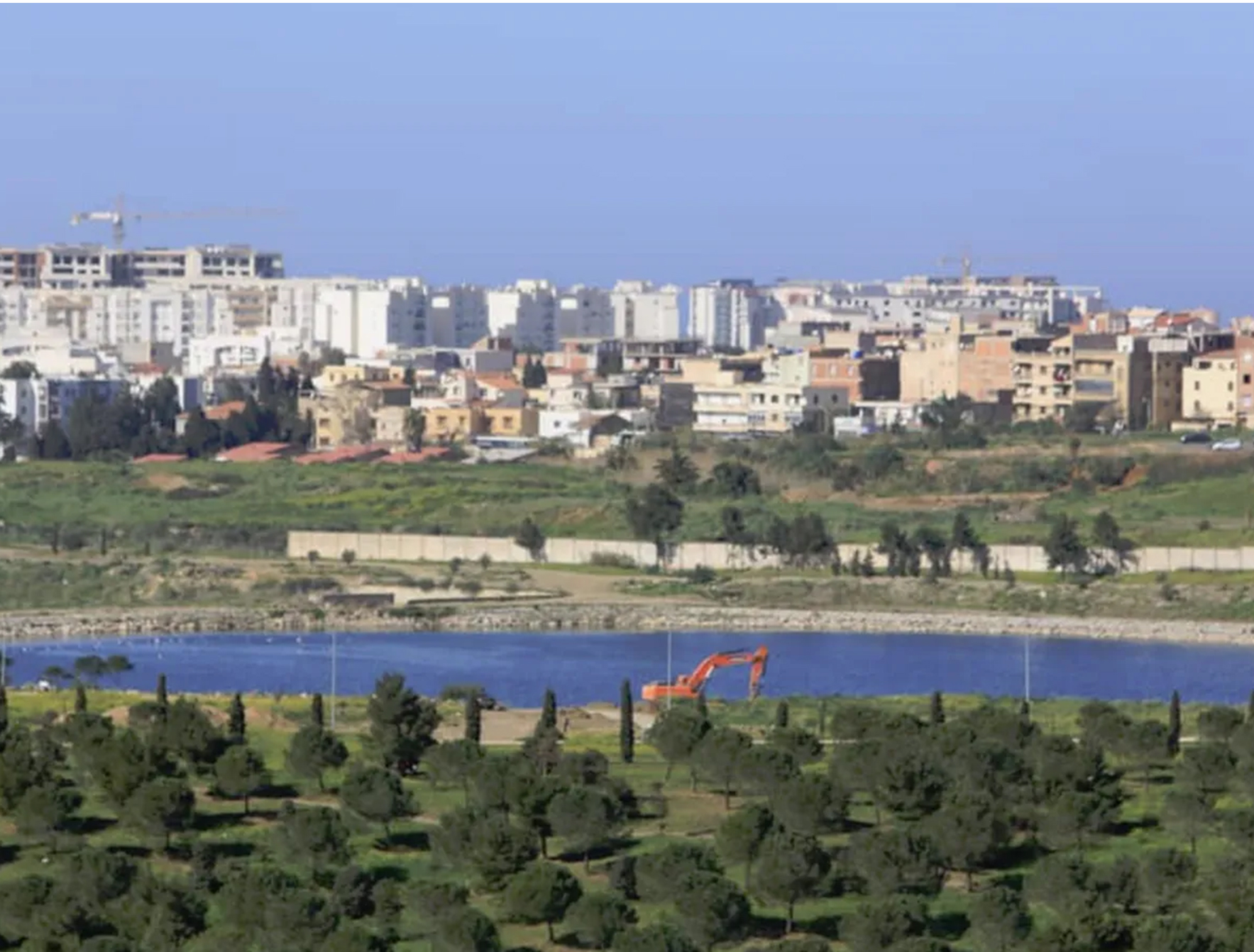
The Béchar Wastewater Treatment Plant, known as El Gatrani 2, is a fifth-generation municipal wastewater treatment and reuse facility developed to upgrade sanitation services, reduce pollution in the Oued Béchar basin, and enable productive reuse of treated effluent for industrial and agricultural purposes.1 2
It is presented as a major environmental infrastructure investment that helps reduce wastewater impacts on the Oued Béchar basin while strengthening water availability for local development needs.3 4
The project envisions “transforming wastewater from an environmental liability into a managed water resource” that supports cleaner waterways, enhanced water security, and resilient local development in Béchar. The project seeks to treat urban wastewater at scale, comply with modern effluent standards through tertiary treatment, and reuse reclaimed water to support economic activities, notably industrial supply and agricultural irrigation. Its impact extends across Béchar city and surrounding production zones, contributing to regional water resilience in an arid context.5
To implement the vision, the project combines treatment capacity, advanced polishing, and reuse-oriented outputs:6 7 8
The plant advances environmental protection, circular water use, and resource efficiency by reducing untreated wastewater discharge into natural water bodies and substituting reclaimed water for potable or groundwater sources. Its reuse-oriented design strengthens water security while supporting industrial productivity and agricultural activity in a water-stressed region.9

Owner/Developer (Public)

Contractor/Implementer
Owner/Developer (Public)
Contractor/Implementer
The Béchar Wastewater Treatment Plant (El Gatrani 2) was delivered as a national public infrastructure investment under Algeria’s water and sanitation policy framework, a state-led approach to environmental protection and water-resource efficiency.10 Ownership and strategic supervision are held by the Ministry of Water Resources (Algeria), with implementation and operation managed by the Office National de l’Assainissement (ONA).11 12
The core wastewater treatment facility represents a public investment estimated at over 4 billion DZD, complemented by an additional state-funded investment of approximately €34 million to develop the reclaimed-water conveyance infrastructure supplying the Toumiat industrial zone.13 14
The facility was commissioned and inaugurated between 2024 and 2025 and is currently operational and is widely positioned as a regional benchmark for advanced wastewater reuse in southern Algeria.
Project Link
Endnotes
N.A.
References
An online library where you can explore relevant data on urban development in the Arab cities.
More



Lorem ipsum dolor sit amet consectetur. Lacus nibh neque erat massa elementum. Ultricies ante sed sed nunc massa ider.
Last updated 3 mins ago
Lorem ipsum dolor sit amet consectetur. Lacus nibh neque erat massa elementum. Ultricies ante sed sed nunc massa ider.
Last updated 3 mins ago
Lorem ipsum dolor sit amet consectetur. Lacus nibh neque erat massa elementum. Ultricies ante sed sed nunc massa ider.
Last updated 3 mins ago
Lorem ipsum dolor sit amet consectetur. Lacus nibh neque erat massa elementum. Ultricies ante sed sed nunc massa ider.
Last updated 3 mins ago
Lorem ipsum dolor sit amet consectetur. Lacus nibh neque erat massa elementum. Ultricies ante sed sed nunc massa ider.
Last updated 3 mins ago
Lorem ipsum dolor sit amet consectetur. Lacus nibh neque erat massa elementum. Ultricies ante sed sed nunc massa ider.
Last updated 3 mins ago