Close
Approach Words: Comprehensive Management, Environment Preservation, Sustainability
Public Policy Instruments: Physical Intervention, Planning, Regulatory
The Selective Waste Sorting System Algeria is a new development initiative targeting major urban areas, beginning in Algiers, Boumerdes, and Oran, before progressive national roll‑out.1 2 Launched in July 2022, with expansion in Oran in May 2025,3 4 the project pilots implementation in three wilayas, then scales nationwide, while deploying 1,700 color‑coded sorting containers across eight municipalities in Oran as part of its expansion.5 6
The project’s vision is to “reconsider the system of sorting and distribution of waste so that this activity has economic profitability.”7 It aims to raise recycling rates by enabling the recycling of 30% of household waste, 30% of special waste, and 50% of inert waste, gradually expand the system to all wilayas, and facilitate recycling operations for specialized companies. These objectives align with the National Integrated Waste Strategy and Algeria’s development model to 2035.8 9
By 2035, the program seeks to reduce household and similar waste by 6 million tons, encourage selective sorting and recycling with value recovery of 88 billion DZD, and create 30,000 direct and 70,000 indirect jobs.10
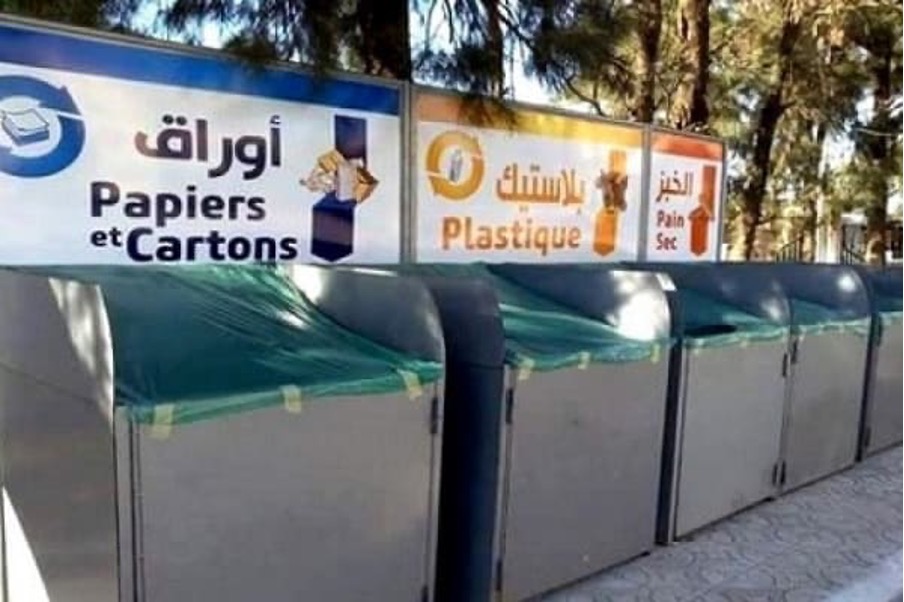
Title: A selective waste sorting station in an Algerian city. Bins are designated for paper/cardboard, plastic, and dry bread to facilitate the source separation of municipal solid waste.
Source: Click Here
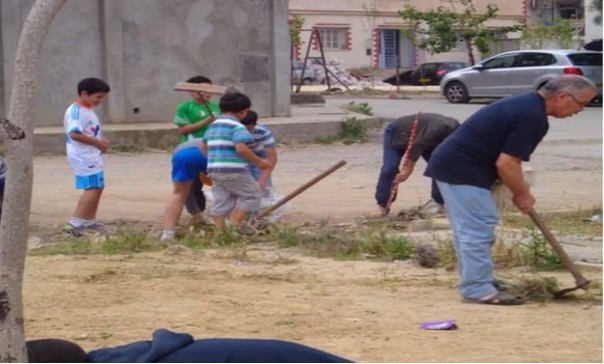
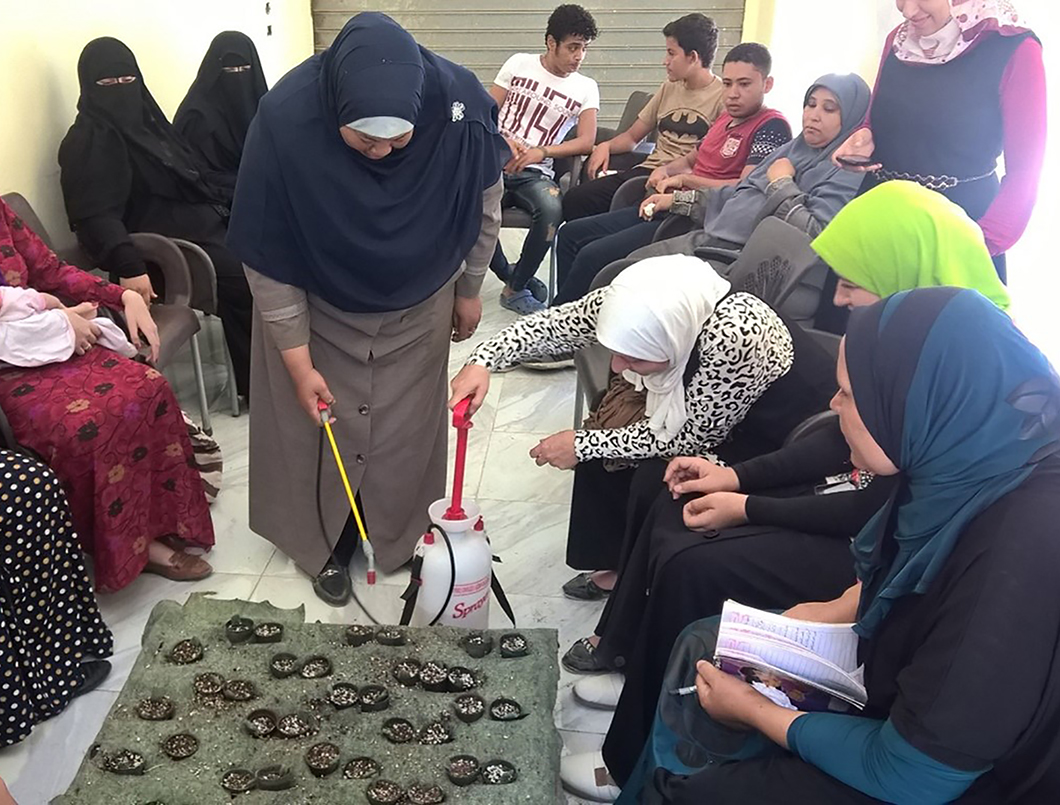
Title: strong community participation during an awareness day for selective waste sorting in the Cheraga district.
Source: Click Here
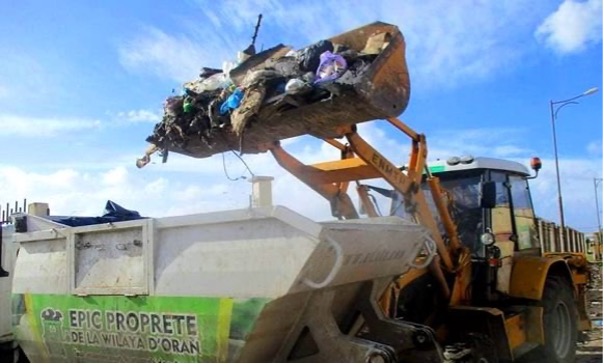
Title: Mechanical loading of unsorted municipal solid waste (MSW) into a collection vehicle operated by the public cleanliness authority in Oran, Algeria
Source: Click Here
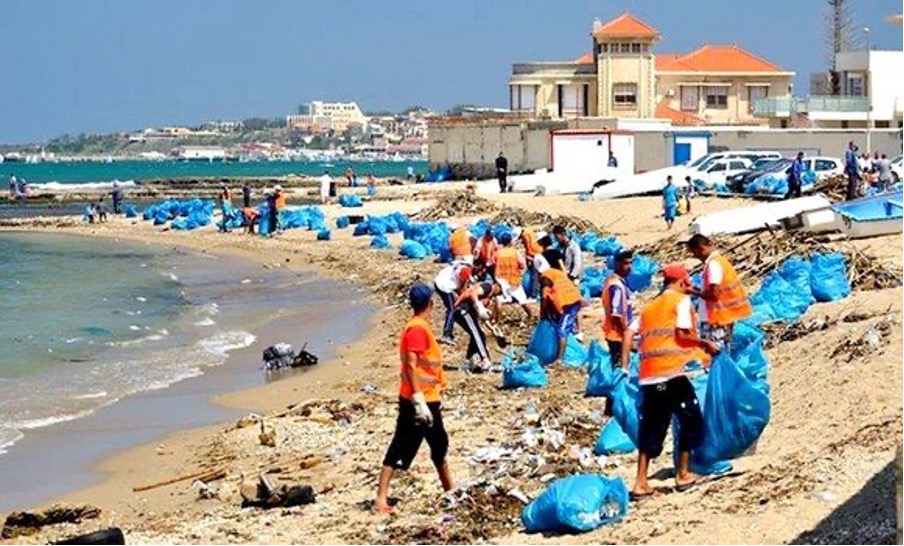
Title: A large-scale beach cleanup campaign on the Algerian coast, addressing the environmental impact of marine debris and solid waste pollution.
Source: Click Here
Title: A selective waste sorting station in an Algerian city. Bins are designated for paper/cardboard, plastic, and dry bread to facilitate the source separation of municipal solid waste.
Source: Click Here
Title: strong community participation during an awareness day for selective waste sorting in the Cheraga district.
Source: Click Here
Title: Mechanical loading of unsorted municipal solid waste (MSW) into a collection vehicle operated by the public cleanliness authority in Oran, Algeria
Source: Click Here
Title: A large-scale beach cleanup campaign on the Algerian coast, addressing the environmental impact of marine debris and solid waste pollution.
Source: Click Here
To implement its vision, the Selective Waste Sorting System Algeria applies a pilot-to-scale national master plan for selective sorting.11 12 Key components include:
The project integrates sustainability via circular‑economy measures and specific recycling targets across household, special, and inert waste streams.21 The project also incorporates innovative practices such as source‑level sorting by households and dedicated containerized separation to streamline downstream processing.22 23 Additionally, special features include a staged pilot‑to‑scale model under ministerial oversight to ensure operational and economic viability prior to nationwide expansion.24 25
The project is managed and implemented by key stakeholders including the Ministry of Environment and Quality of Life as lead authority, the National Waste Agency (AND) responsible for coordination and technical oversight, and wilaya‑level administrations for local executions, notably Oran.26 27 Besides, other ministries are involved under national directives and local administrations for on‑the‑ground execution.28 29

Contractor/Implementer
Wilaya of Oran and involved municipalities (implementation on ground)38
Contractor/Implementer
Wilaya of Oran and involved municipalities (implementation on ground)38
The project’s implementation is structured into three phases:30 31 32
Currently, the project is ongoing, with Oran’s deployment underway and selective‑sorting initiatives advancing within Algeria’s circular‑economy agenda.33 Upon completion, it is expected to increase recycling rates, reduce waste generation, and deliver significant economic value and job creation in line with the national 2035 strategy.34
Project Link
Endnotes
N.A.
References
An online library where you can explore relevant data on urban development in the Arab cities.
More



Lorem ipsum dolor sit amet consectetur. Lacus nibh neque erat massa elementum. Ultricies ante sed sed nunc massa ider.
Last updated 3 mins ago
Lorem ipsum dolor sit amet consectetur. Lacus nibh neque erat massa elementum. Ultricies ante sed sed nunc massa ider.
Last updated 3 mins ago
Lorem ipsum dolor sit amet consectetur. Lacus nibh neque erat massa elementum. Ultricies ante sed sed nunc massa ider.
Last updated 3 mins ago
Lorem ipsum dolor sit amet consectetur. Lacus nibh neque erat massa elementum. Ultricies ante sed sed nunc massa ider.
Last updated 3 mins ago
Lorem ipsum dolor sit amet consectetur. Lacus nibh neque erat massa elementum. Ultricies ante sed sed nunc massa ider.
Last updated 3 mins ago
Lorem ipsum dolor sit amet consectetur. Lacus nibh neque erat massa elementum. Ultricies ante sed sed nunc massa ider.
Last updated 3 mins ago