Close
Approach Words: Environment Preservation, Sustainability, Urban Livability
Public Policy Instruments: Financial Mechanism, Physical Intervention, Planning
The Yemen’s First Waste-to-Energy (WtE) Plant is a new development initiative located in the coastal Lahj Governorate, south of Aden.1 Launched in 2021 with the installation of 500 kg-per-hour pyrolysis unit at a municipal dump site by UNDP, the project introduces an innovative approach to municipal waste management.2
The project’s vision is “to convert solid waste into affordable electricity to support Yemen prosperity”.3 It aims to reduce open-air burning that exacerbates respiratory diseases,4 lower dependence on diesel fuel by supplying clean power to surrounding communities,5 and create green jobs for displaced youth and women.6
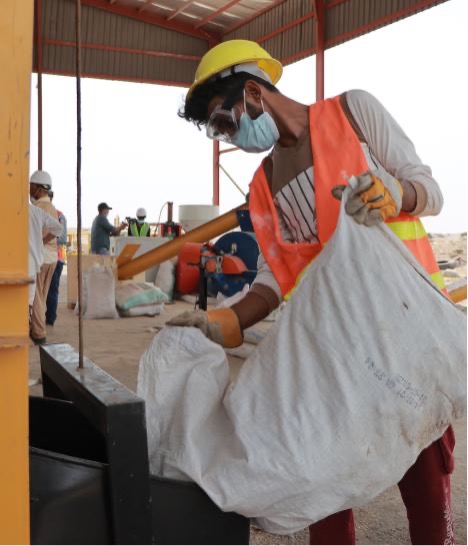
Title: UNDP has established the first Waste-to-Energy Plant in Yemen
Source: Click Here
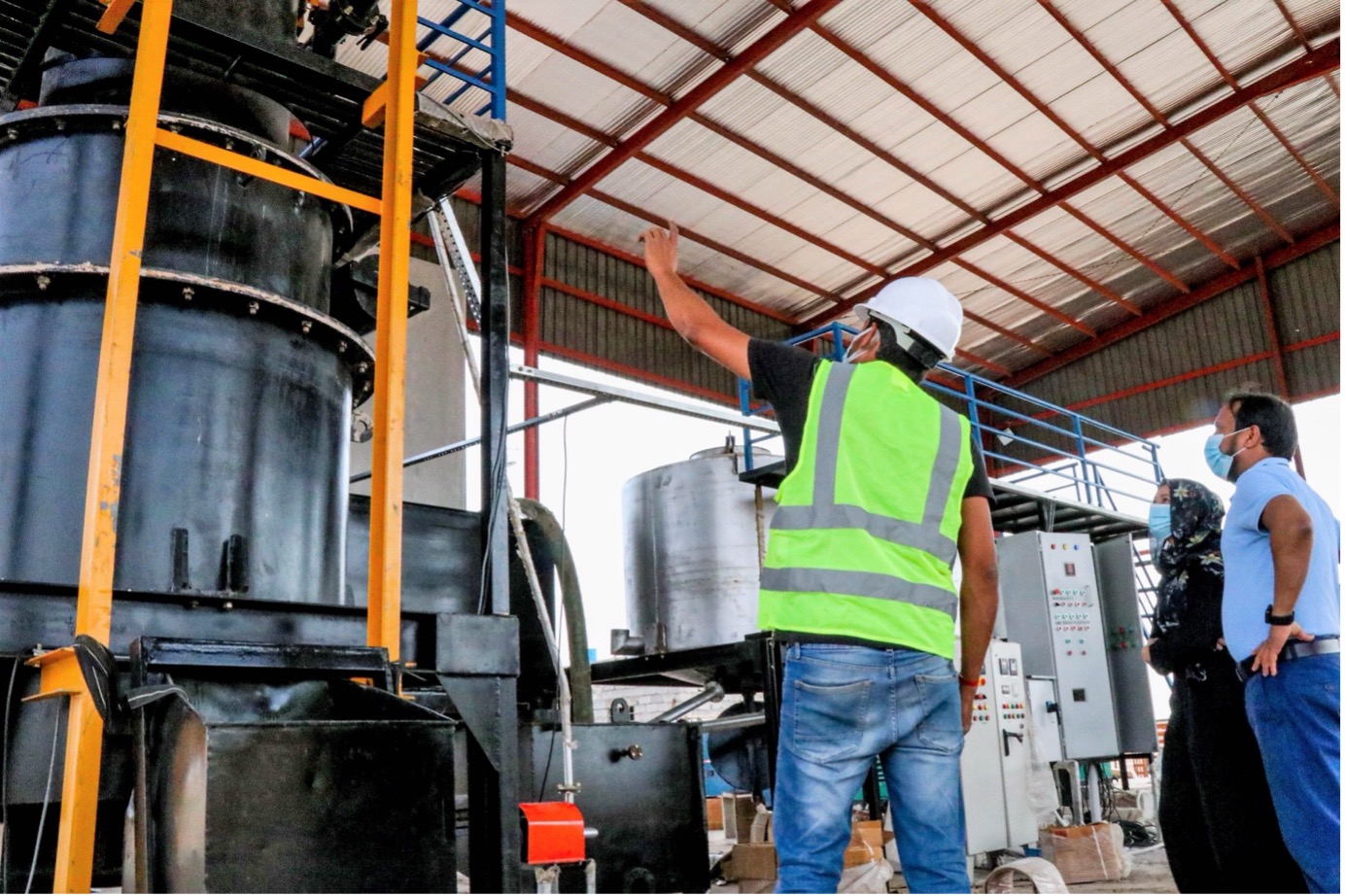
Title: A UNDP-supported waste-to-energy facility in Lahj designed to convert local waste into sustainable power.
Source: Click Here
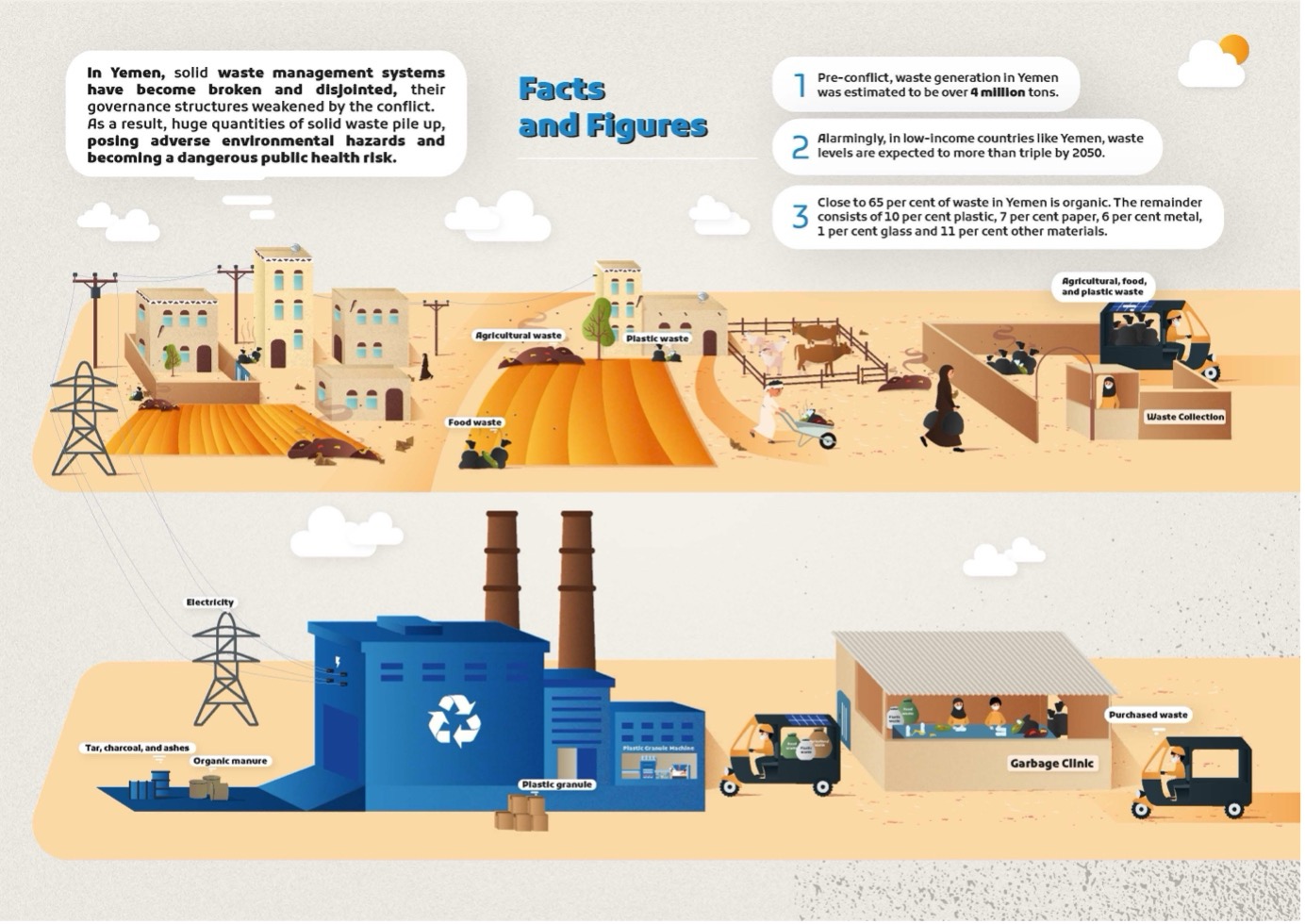
Title: Infographics about waste management process for the project.
Source: Click Here
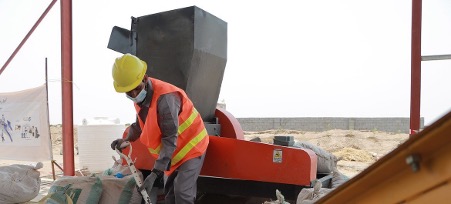
Title: An operator feeding solid waste into a processing unit at the Lahj waste-to-energy plant, a critical step in converting waste into usable energy resources.
Source: Click Here
Title: UNDP has established the first Waste-to-Energy Plant in Yemen
Source: Click Here
Title: A UNDP-supported waste-to-energy facility in Lahj designed to convert local waste into sustainable power.
Source: Click Here
Title: Infographics about waste management process for the project.
Source: Click Here
Title: An operator feeding solid waste into a processing unit at the Lahj waste-to-energy plant, a critical step in converting waste into usable energy resources.
Source: Click Here
To implement these objectives, the plant incorporates a range of technological and social components that include:7 8 9
The project is managed by UNDP Yemen, in partnership with the Governorate of Lahj and the municipal waste-management authority,10 and in collaboration with the Global Partnership for Results based Approaches, and the World Bank-funded Yemen Integrated Urban Services Project.11

Owner/Developer (Public)


Consultant/Designer

Contractor/Implementer
Owner/Developer (Public)
Contractor/Implementer
Consultant/Designer
The project follows a phased implementation plan:12 13
Currently, the plant is operational at pilot scale, with preparations for Phase 2 upgrades underway.14
Upon completion, the Yemen’s First WtE Plant is expected to supply stable electricity to households, divert thousands of Kilograms of landfill waste annually, create up to 7,500 jobs for vulnerable people, and demonstrate a scalable model for replication in other Yemeni cities.15
Project Link
https://city2city.network/undp-has-established-first-waste-energy-plant-yemen-0
Endnotes
N.A.
References
An online library where you can explore relevant data on urban development in the Arab cities.
More





Lorem ipsum dolor sit amet consectetur. Lacus nibh neque erat massa elementum. Ultricies ante sed sed nunc massa ider.
Last updated 3 mins ago
Lorem ipsum dolor sit amet consectetur. Lacus nibh neque erat massa elementum. Ultricies ante sed sed nunc massa ider.
Last updated 3 mins ago
Lorem ipsum dolor sit amet consectetur. Lacus nibh neque erat massa elementum. Ultricies ante sed sed nunc massa ider.
Last updated 3 mins ago
Lorem ipsum dolor sit amet consectetur. Lacus nibh neque erat massa elementum. Ultricies ante sed sed nunc massa ider.
Last updated 3 mins ago
Lorem ipsum dolor sit amet consectetur. Lacus nibh neque erat massa elementum. Ultricies ante sed sed nunc massa ider.
Last updated 3 mins ago
Lorem ipsum dolor sit amet consectetur. Lacus nibh neque erat massa elementum. Ultricies ante sed sed nunc massa ider.
Last updated 3 mins ago