Close
Approach Words: Capacity Building, Integrated City, Sustainability
Public Policy Instruments: Financial Mechanism, Organization, Planning, Regulatory
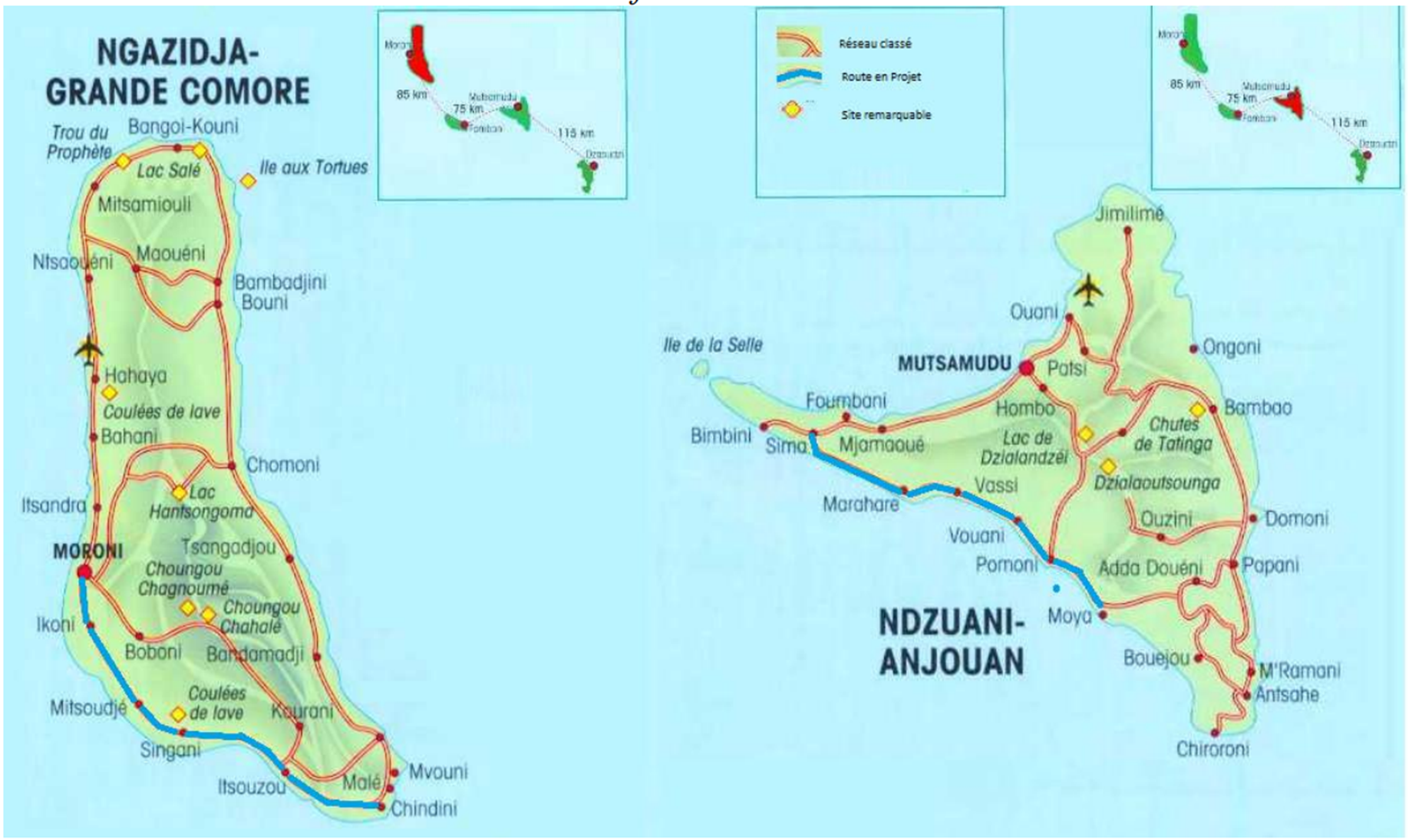
The DECOR (Développement d’un Système Intégré de Gestion des Déchets) project is a strategic initiative aimed at establishing an integrated municipal solid waste management system in Moroni, the capital city of the Union of the Comoros.1 2 This initiative aligns with the broader development goals of the Comoros by addressing inadequate waste disposal and landfill overuse, while supporting environmental sustainability, public health, and economic development. By promoting long-term infrastructure, community engagement, and capacity building, the project serves as a model for future replication.3 4
DÉCOR’s vision is to “modernize waste management practices by adopting circular economy approach”5 that emphasizes material recovery and recycling to reduce landfill waste. It includes the development of waste collection, sorting, recycling, and disposal infrastructures,6 alongside building local capacity through training, resource provision,7 and public awareness campaigns.8
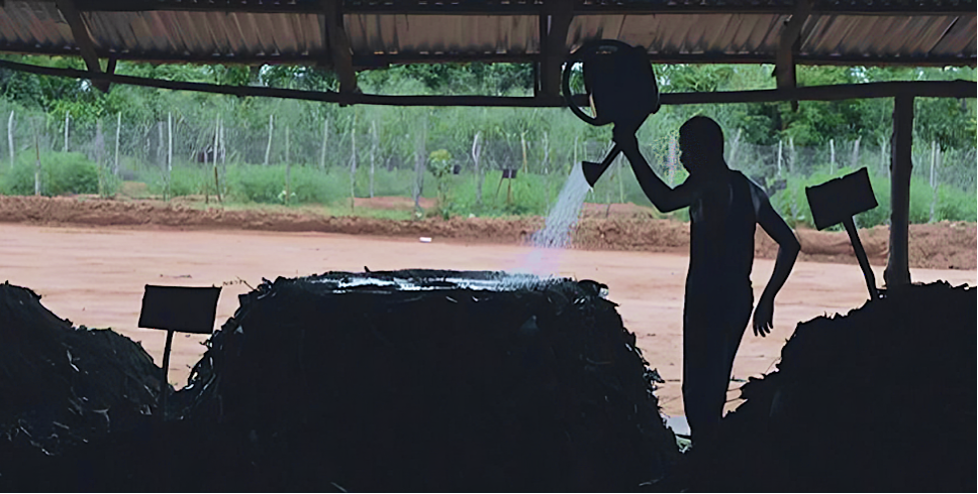
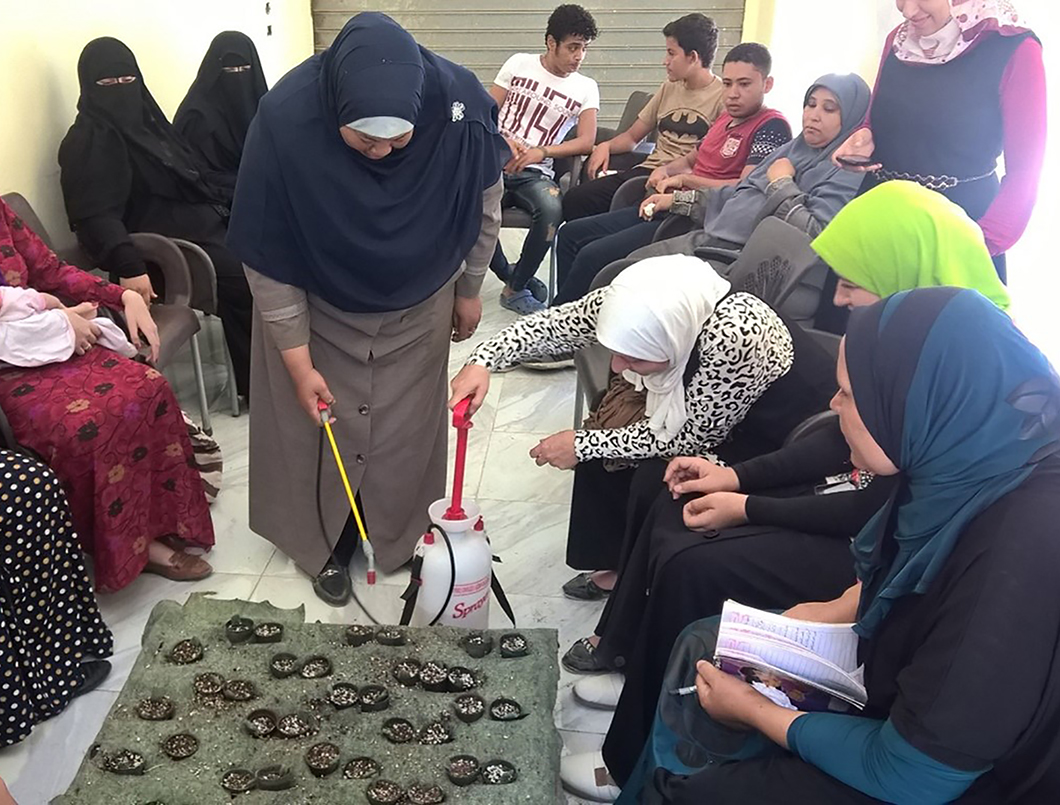
Title: watering a pile of decomposing organic material -organic waste management facility.
Source: Click Here
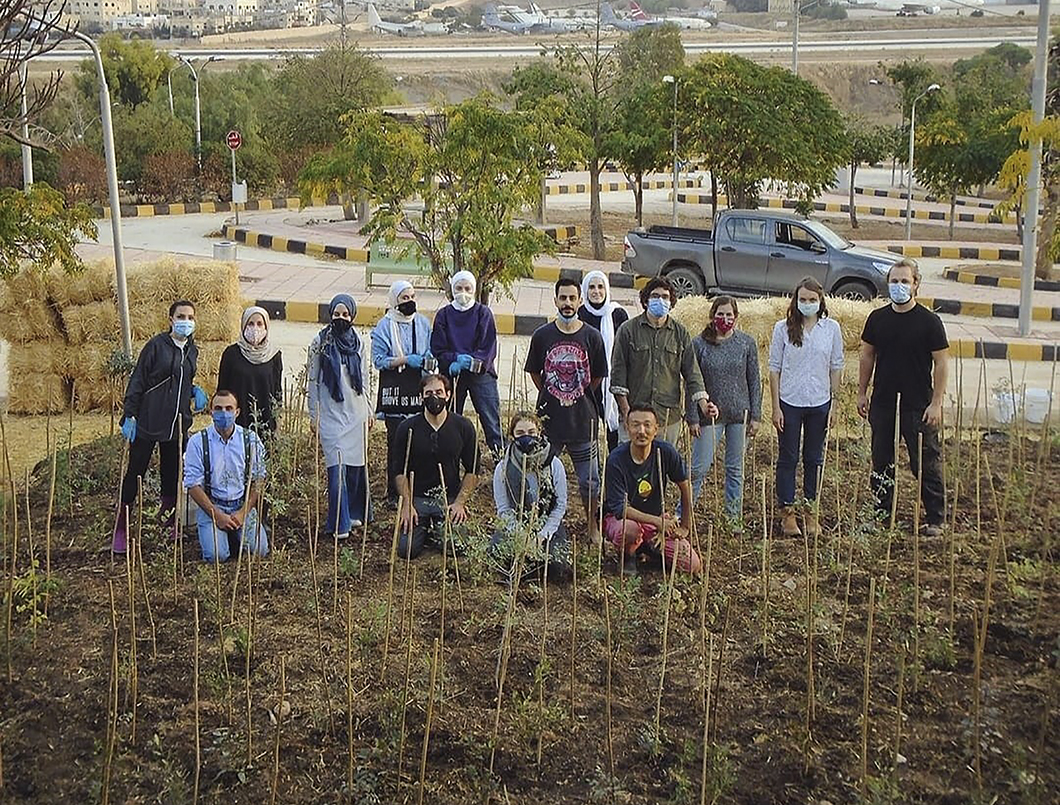
Title: watering a pile of decomposing organic material -organic waste management facility.
Source: Click Here
The initiative is founded on three core values:
(1) Environmental Sustainability: Reducing open-air landfills, preventing groundwater contamination, and promoting composting and recycling practices.9 10
(2) Public Health Enhancement: Addressing waste-related diseases and reducing air pollution caused by improper waste combustion.11
(3) Economic Development: Creating green jobs in recycling, waste processing, and composting.12
To implement this vision, DECOR employs several strategic instruments:
DECOR’s objectives will be achieved through community engagement activities, including awareness campaigns, eco-graffiti, school activities, creative workshops with NGOs.17 In parallel, technical and feasibility studies will support the development of key infrastructure such as material recovery centers and a biogas system at the Volo market.18
It benefits Moroni residents by improving sanitation, waste management services, and public health. It also supports businesses and tourism sector by creating cleaner urban areas and reducing health risks.19 Additionally, municipal and government institutions will gain from improved waste management infrastructure and better policy coordination.20

Consultant/Designer

Contractor/Implementer
Contractor/Implementer
Consultant/Designer
DECOR is a collaborative effort promoted by the Italian Ministry for Environment, Land and Sea (IMELS) and the Comorian Ministry of Agriculture, Fisheries, Environment, and Urban Planning.21 It is implemented by Contarina S.p.A., an Italian waste management company, Venice International University (VIU), and Fermenta Italia, in partnership with local NGOs, municipalities, and civil society organizations focused on training and awareness.22
The project has a total budget of $1,671,545 and an expected duration of 24 months (pending final confirmation).23 It was launched following the signing of a Memorandum of Understanding (MoU) at COP21 in 2015, followed by a technical visit to Comoros and a Joint Committee meeting in 2016 to identify key challenges.24 25 Implementation is structured in three phases:26
Phase 1: feasibility study, national strategy development, and capacity-building workshops
Phase 2: infrastructure development, including waste collection, MBT plants, and biogas-to-electricity systems
Phase 3: public awareness and long-term community engagement.
Project Link
Endnotes
N.A.
References
An online library where you can explore relevant data on urban development in the Arab cities.
More



Lorem ipsum dolor sit amet consectetur. Lacus nibh neque erat massa elementum. Ultricies ante sed sed nunc massa ider.
Last updated 3 mins ago
Lorem ipsum dolor sit amet consectetur. Lacus nibh neque erat massa elementum. Ultricies ante sed sed nunc massa ider.
Last updated 3 mins ago
Lorem ipsum dolor sit amet consectetur. Lacus nibh neque erat massa elementum. Ultricies ante sed sed nunc massa ider.
Last updated 3 mins ago
Lorem ipsum dolor sit amet consectetur. Lacus nibh neque erat massa elementum. Ultricies ante sed sed nunc massa ider.
Last updated 3 mins ago
Lorem ipsum dolor sit amet consectetur. Lacus nibh neque erat massa elementum. Ultricies ante sed sed nunc massa ider.
Last updated 3 mins ago
Lorem ipsum dolor sit amet consectetur. Lacus nibh neque erat massa elementum. Ultricies ante sed sed nunc massa ider.
Last updated 3 mins ago