Close
Approach Words: Smart City, Sustainability, Urban Resilience
Public Policy Instruments: Infrastructure, Planning, Regulatory
The Cairo Municipal Solid Waste Management Project is a rehabilitation initiative overhauling the waste management system in Cairo Governorate, Egypt’s largest and most densely populated governorate,1 generating over 15,000 tons of solid waste daily.2
The project envisions “an inclusive, efficient, and comprehensive waste management system that provides quality services while safeguarding the socio-economic needs of citizens and informal workers.” 3
The project seeks to transform Cairo’s waste management system into an inclusive, efficient, and sustainable model by upgrading infrastructure, strengthening governance, and formally integrating the informal sector. It focuses on environmental protection, public health, social equity, and economic efficiency.4 It also aims to address health concerns among waste workers, particularly exposure to hazardous materials like improperly disposed medical waste that contributes to high rates of Hepatitis C Virus infection.5
لتنفيذ هذه الرؤية، تبنّى المشروع استراتيجية شاملة متعددة الأبعاد، تضمنت
To implement the vision, the project introduced a multi-pronged strategy that includes: upgrading existing waste facilities;6 creating a new contractual framework to replace expired agreements with international companies;7 integrating the informal waste sector through legal licensing and SME/NGO support;8 and introducing smart technologies such as IoT and AI for system optimization.9
Focusing on Cairo’s city-wide challenges, across residential neighborhoods, particularly on informal and underserved areas,10 it enhances systems of waste collection, transportation, sorting, recycling, and landfill reduction. It seeks to modernize mobility of waste streams, improve public sanitation and enhance community facilities.11
The project emphasizes environmental sustainability and technological innovation.12 These values are pursued through the hybrid use of traditional practices by the Zabbaleen community,13who recycle up to 85% of collected waste.14
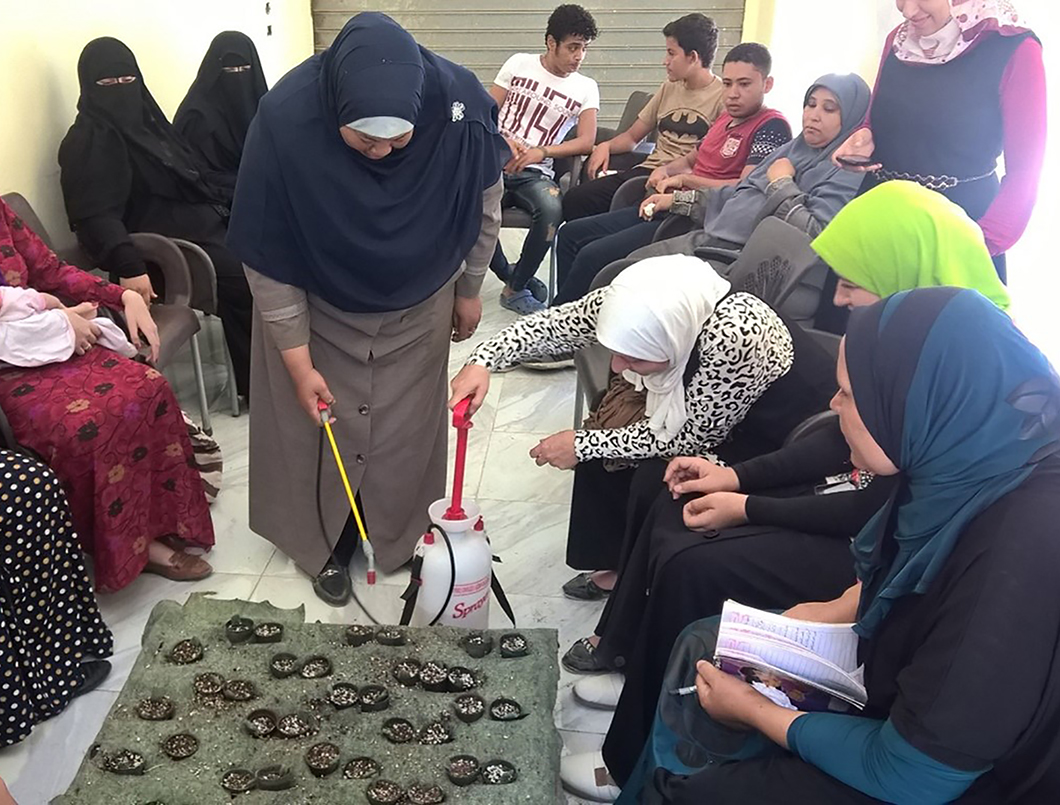
This project comprises several interventions and commitment to formally incorporating the Zabbaleen informal waste collectors, preserving remarkable recycling rates while improving working conditions and public health.15

Owner/Developer (Public)

Consultant/Designer

Funder

Contractor/Implementer
Owner/Developer (Public)
Contractor/Implementer
Funder
Consultant/Designer
With a total project cost of US$ 150.00 million, the Cairo Municipal Solid Waste Management Project involves multiple stakeholders working together. Cairo Governorate serves as the primary implementing agency, with oversight from the Ministry of State for Urban Renewal and Informal Settlements (MURIS16 responsible for setting the national municipal waste management strategy. The Cairo Cleaning and Beautification Authority (CCBA) oversees the different collection arrangements across the city’s four service regions. The World Bank and the European Bank for Reconstruction and Development (EBRD)17provide funding and technical assistance. The Association for the Protection of the Environment (APE), established in 1984, represents 18. Initiated in 2014, the project went through several phases:
Phase 1 (2014-2015): Initial planning and pre-feasibility studies.
Phase 2 (2015-2017): Contractual framework development
Phase 3 (2017-onwards): Infrastructure improvements and sector integration.19
Although the World Bank did not proceed beyond the concept review stage, elements of the project continue under Egyptian and international initiatives,20 with EBRD support fund for pre-feasibility studies and ongoing national reform efforts.21 Despite the formal project status, the initiative highlighted the critical role of the informal waste sector in Cairo’s waste management system and the need for integrated approaches that combine formal and informal systems to achieve sustainable waste management in rapidly growing urban areas22.
Project Link
Endnotes
N.A.
References
An online library where you can explore relevant data on urban development in the Arab cities.
More



Lorem ipsum dolor sit amet consectetur. Lacus nibh neque erat massa elementum. Ultricies ante sed sed nunc massa ider.
Last updated 3 mins ago
Lorem ipsum dolor sit amet consectetur. Lacus nibh neque erat massa elementum. Ultricies ante sed sed nunc massa ider.
Last updated 3 mins ago
Lorem ipsum dolor sit amet consectetur. Lacus nibh neque erat massa elementum. Ultricies ante sed sed nunc massa ider.
Last updated 3 mins ago
Lorem ipsum dolor sit amet consectetur. Lacus nibh neque erat massa elementum. Ultricies ante sed sed nunc massa ider.
Last updated 3 mins ago
Lorem ipsum dolor sit amet consectetur. Lacus nibh neque erat massa elementum. Ultricies ante sed sed nunc massa ider.
Last updated 3 mins ago
Lorem ipsum dolor sit amet consectetur. Lacus nibh neque erat massa elementum. Ultricies ante sed sed nunc massa ider.
Last updated 3 mins ago