Close
Approach Words: Heritage Preservation, Participatory Approach, Urban Livability
Public Policy Instruments: Communicative, Financial Mechanism, Organization, Physical Intervention, Planning, Regulatory
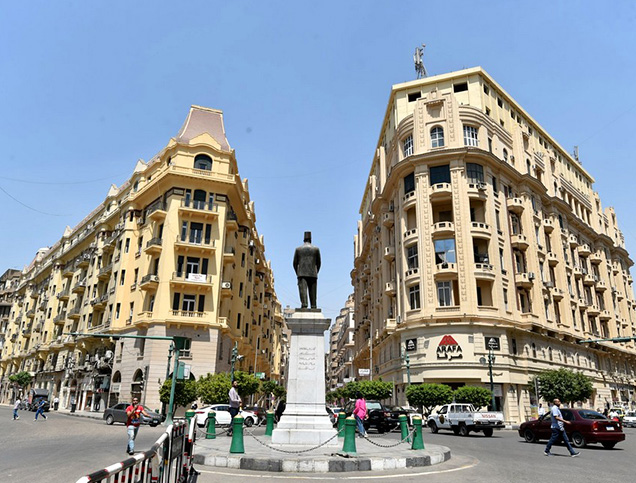
The Downtown Cairo Passageways Project is a redevelopment initiative aimed at revitalizing historic urban passageways in the heart of Cairo. By reimagining underutilized alleys, setbacks, and side streets, the project seeks to enhance public spaces, foster social and cultural engagement1, local economic growth. With an overall goal to develop downtown passageways network a as framework for urban regeneration through art and culture, a pilot project to design and implement two passages, Kodak and Phillips, 2 the project was launched in April 2014 through a collaborative design workshop with architects, urban planners, and cultural experts .3
The vision was to create “a vibrant, inclusive, and sustainable urban hub that honors Cairo’s historical legacy while paving the way for innovative cultural and economic activities.” 4 5. The main objectives of this initiative include reviving public spaces, fostering local business growth, enhancing pedestrian accessibility, Capitalize on the role of art, culture and creative initiatives downtown as an urban catalyst, Contribute to broader frameworks for urban research and design intervention which aligning with Egypt’s broader urban regeneration strategies6 .
As part of a larger initiative to document and reimagine the city’s urban landscape, Downtown Cairo Passageways contributes to a broader framework for urban research and design interventions7 8.
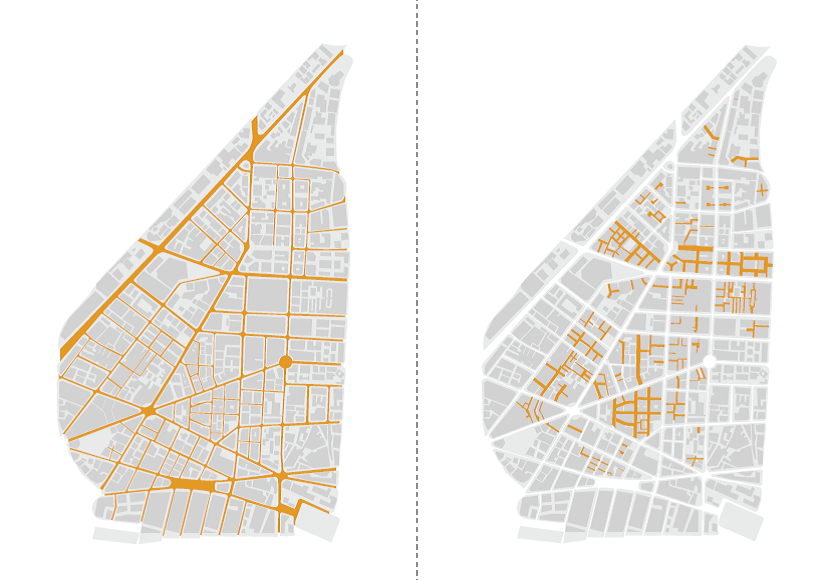
Title: Street network versus Passageway network.
Source: Click Here
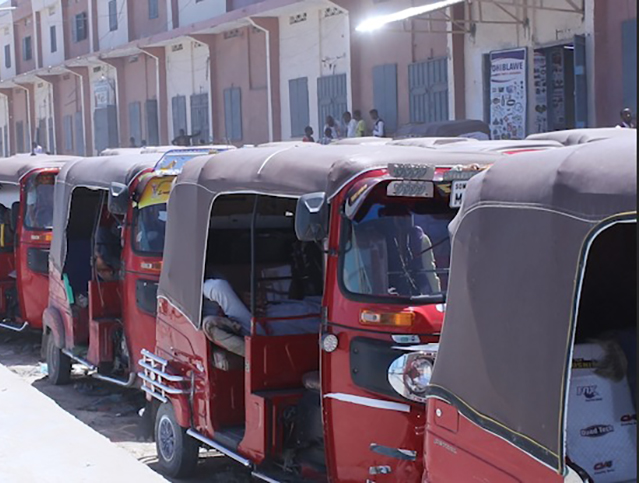
Title: Kodak Passageway after renovation
Source: Click Here

Title: Cairo Downtown Passageways publication
Source: Click Here
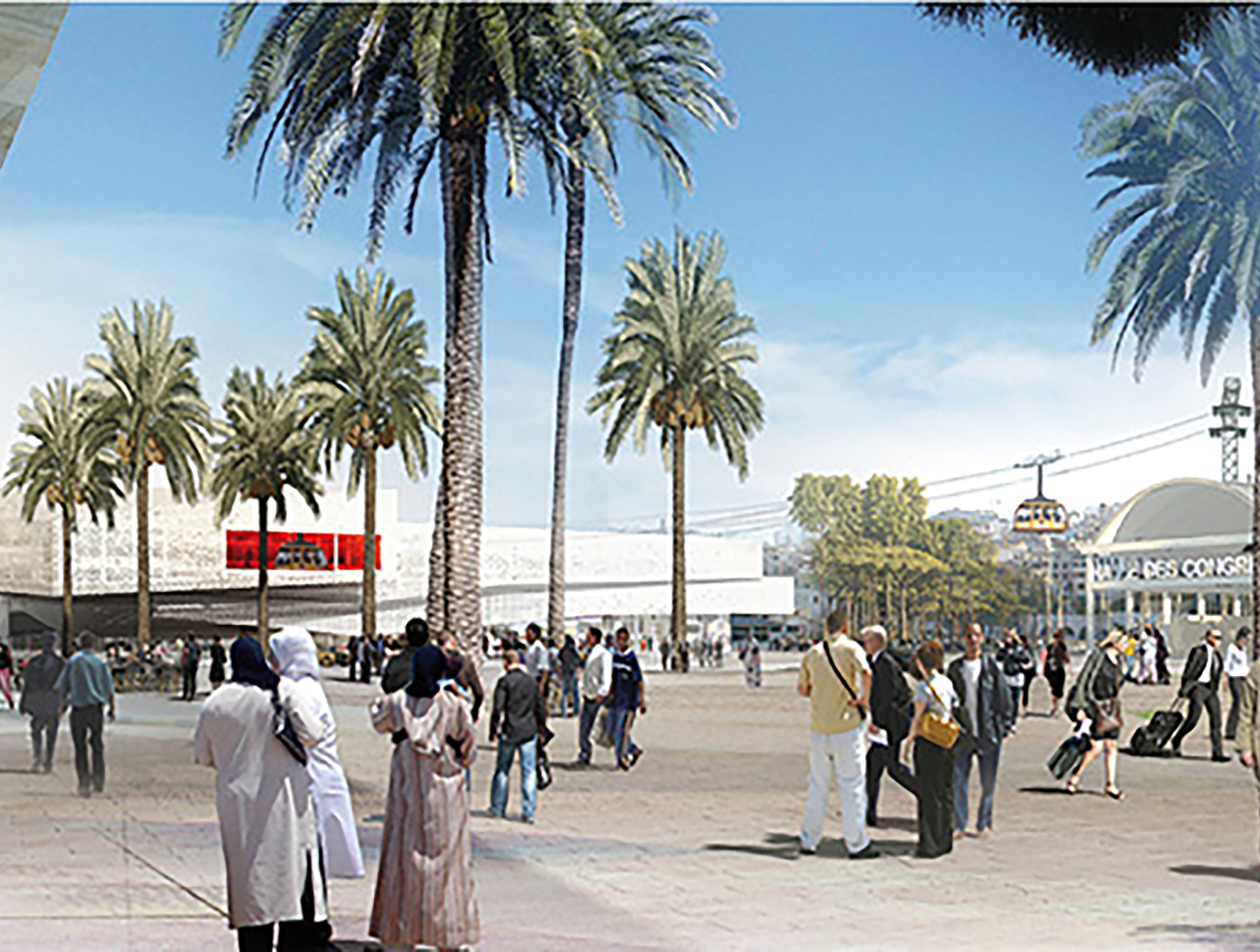
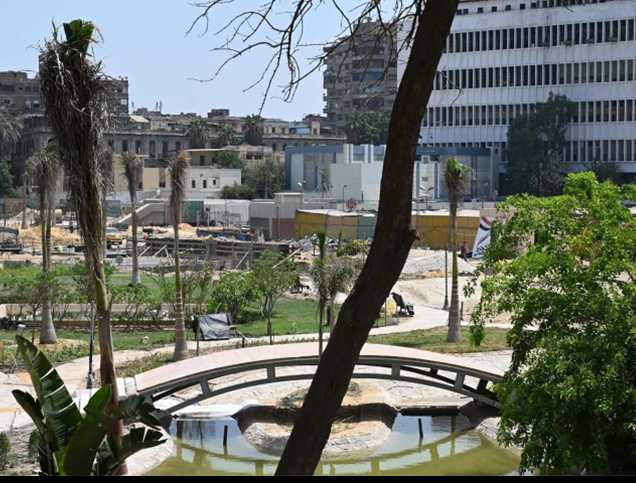
Title: Passageways greening to create public spaces for everyone and fits with place identity.
Source: Click Here
Title: Street network versus Passageway network.
Source: Click Here
Title: Kodak Passageway after renovation
Source: Click Here
Title: Cairo Downtown Passageways publication
Source: Click Here
Title: Passageways greening to create public spaces for everyone and fits with place identity.
Source: Click Here
To implement these objectives, the broader Downtown passageways proposal covered over 2 square kilometers, 9 transforming neglected or underutilized passageways into vibrant pedestrian-friendly spaces, through innovative approach to architectural heritage downtown addressing social space not just physical structures.10 . the project has Key components include:

Owner/Developer (Public)

Owner/Developer
Owner/Developer (Public)
Owner/Developer
The Downtown Cairo Passageways Project is spearheaded by CLUSTER in collaboration with various stakeholders, including the Danish-Egyptian Dialogue Initiative (DEDI), the Center for Culture and Development (CKU), and local urban development agencies15 . The project is being implementing in phases as follows:
Phase 1 (2014-2016): Extensive urban research, design workshops, and initial pilot interventions in select passageways16 17.
Phase 2 (2017-2020): Expansion of revitalization efforts, increased community engagement, and pilot projects in redesigned spaces18.
Phase 3 (2021-Ongoing): Large-scale implementation, policy integration, and long-term sustainability planning19 .
One of the most notable successes of the initiative is the Kodak Passageway revitalization, which has been successfully set a benchmark for future transformations across downtown Cairo20 21. With ongoing efforts to scale up these interventions, the project serves as a model for integrating heritage preservation with modern urban planning, aiming to enhance the cultural and economic vitality of the city center22 23.
Project Link
https://passageways.clustermappinginitiative.org/
Endnotes
N.A.
References
An online library where you can explore relevant data on urban development in the Arab cities.
More



Lorem ipsum dolor sit amet consectetur. Lacus nibh neque erat massa elementum. Ultricies ante sed sed nunc massa ider.
Last updated 3 mins ago
Lorem ipsum dolor sit amet consectetur. Lacus nibh neque erat massa elementum. Ultricies ante sed sed nunc massa ider.
Last updated 3 mins ago
Lorem ipsum dolor sit amet consectetur. Lacus nibh neque erat massa elementum. Ultricies ante sed sed nunc massa ider.
Last updated 3 mins ago
Lorem ipsum dolor sit amet consectetur. Lacus nibh neque erat massa elementum. Ultricies ante sed sed nunc massa ider.
Last updated 3 mins ago
Lorem ipsum dolor sit amet consectetur. Lacus nibh neque erat massa elementum. Ultricies ante sed sed nunc massa ider.
Last updated 3 mins ago
Lorem ipsum dolor sit amet consectetur. Lacus nibh neque erat massa elementum. Ultricies ante sed sed nunc massa ider.
Last updated 3 mins ago