Close
Approach Words: Environment Preservation, Sustainability, Urban Resilience
Public Policy Instruments: Communicative, Financial Mechanism, Organization, Physical Intervention, Planning
The Solid Waste Management Services project in Deir ez-Zor, Syria, is a rehabilitation initiative addressing the disruption of solid waste collection and disposal services caused by conflict and infrastructure destruction1 in Deir ez-Zor Governorate (SRTF Phase I). Initiated in 2011, the project is unique for its large-scale, phased approach, targeting waste clearance from damaged schools, public areas, and destroyed infrastructure, such as water towers, to restore sanitation and public health.2
The project envisions to “re-establish cleaning and collection of waste and management of sanitation services” for over 200,000 people across 15 villages.3 Its aims include clearing solid waste debris, conducting needs assessments for informed future, and providing employment opportunities, aligning with national post-conflict recovery and stabilization objectives.4 5
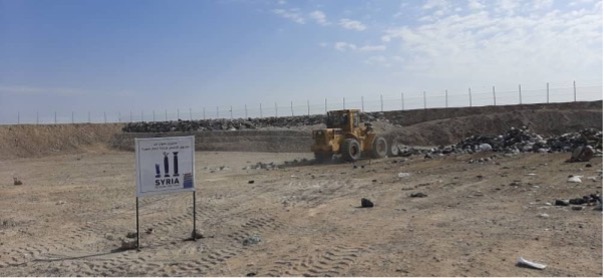
Title: Rubble removal in Deir ez-Zor. An excavator demolishes a conflict-damaged structure, generating construction and demolition waste that requires specialised management and disposal as part of the city's recovery efforts
Source: Click Here
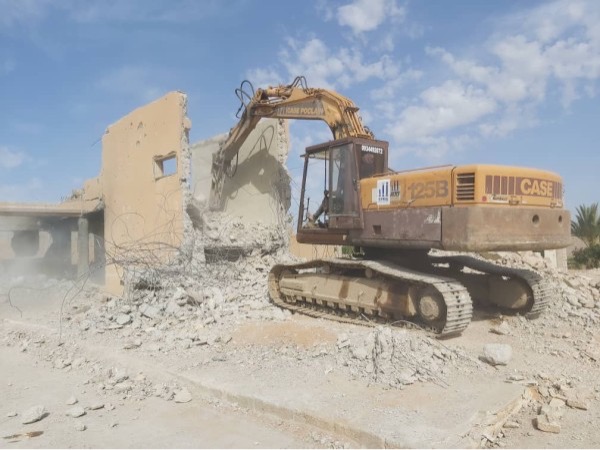
Title: Landfill operations in Deir ez-Zor. A front-end loader is shown levelling municipal solid waste as part of the daily management and compaction process at a designated disposal site
Source: Click Here
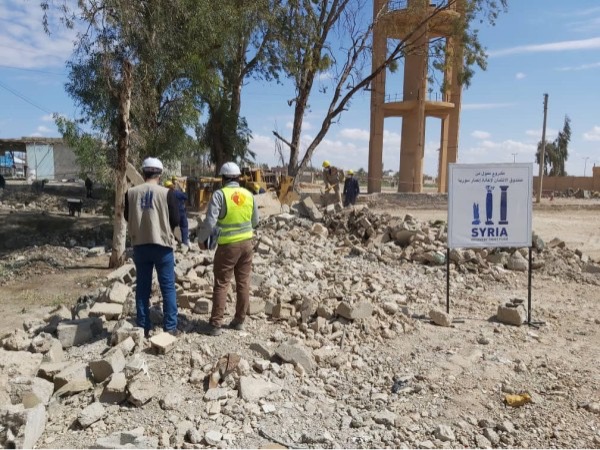
Title: On-site management of demolition waste. Project personnel oversee the collection and sorting of rubble from damaged infrastructure, a critical component of urban recovery and solid waste management.
Source: Click Here
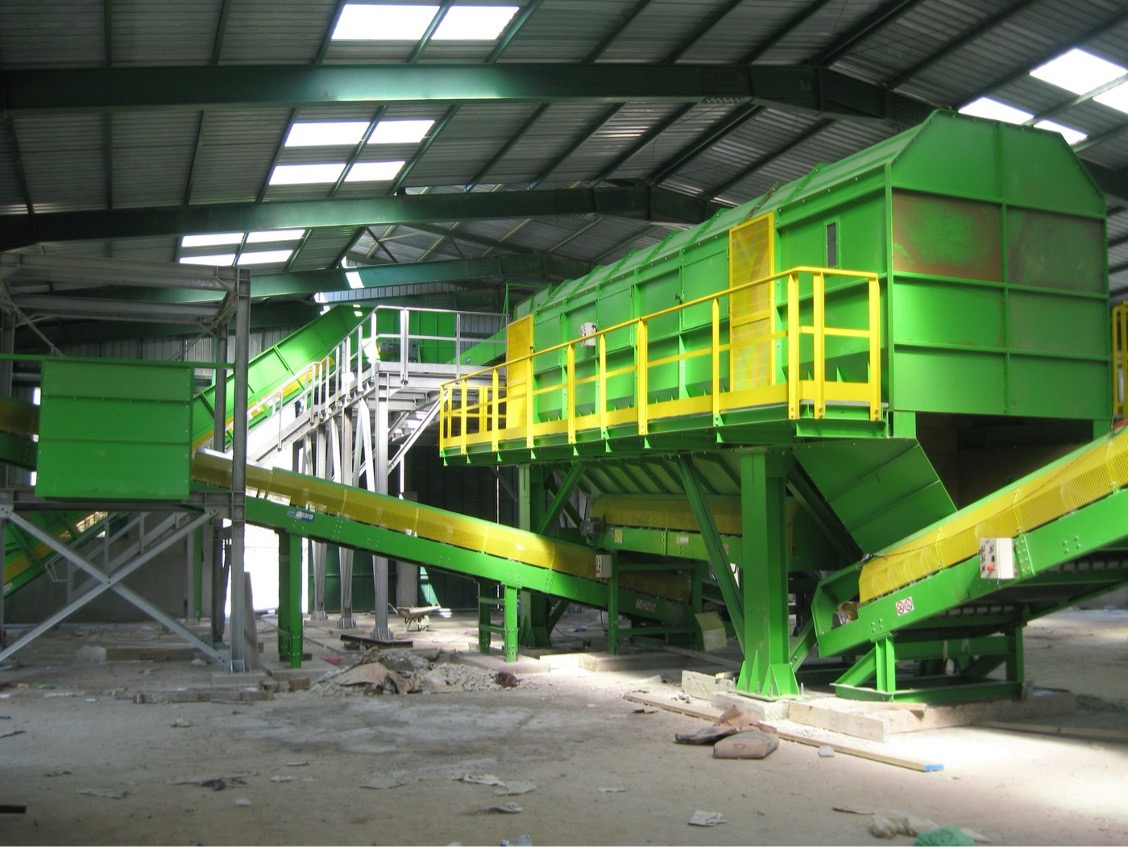
Title: material recovery facility (MRF) established in Deir ez-Zor. The image shows the sorting line and conveyor system designed to separate recyclable materials from the municipal solid waste stream before final disposal.
Source: Click Here
Title: Rubble removal in Deir ez-Zor. An excavator demolishes a conflict-damaged structure, generating construction and demolition waste that requires specialised management and disposal as part of the city's recovery efforts
Source: Click Here
Title: Landfill operations in Deir ez-Zor. A front-end loader is shown levelling municipal solid waste as part of the daily management and compaction process at a designated disposal site
Source: Click Here
Title: On-site management of demolition waste. Project personnel oversee the collection and sorting of rubble from damaged infrastructure, a critical component of urban recovery and solid waste management.
Source: Click Here
Title: material recovery facility (MRF) established in Deir ez-Zor. The image shows the sorting line and conveyor system designed to separate recyclable materials from the municipal solid waste stream before final disposal.
Source: Click Here
To implement these objectives, the project coverage of 15 villages in Phase I and 21 towns and villages over 90 sites in Phase II, primarily on the eastern bank of the Euphrates River in Deir ez-Zor Governorate.6 Key components include:7
The project integrates sustainability through waste dumpsite rehabilitation, promoting proper waste management and improved environmental health conditions.8 It also incorporates community engagement through participatory approaches and public consultation that enhance effectiveness and acceptance, capacity building that strengthens local authorities, and employment creation through cash-for-work programs that provide livelihood opportunities for residents.9 10

Owner/Developer (Public)

Contractor/Implementer
Owner/Developer (Public)
Contractor/Implementer
The project is managed and implemented by the Stabilization Review and Transparency Fund (SRTF) in close collaboration with local NGOs and municipal authorities under the Ministry of Local Administration and Environment.11 12
It is implemented in two main phases:13 14
Upon completion, this project restored essential waste management services, reduced health risks, and created livelihoods for over 381,000 residents, contributing to longer-term recovery and stabilization of the Deir ez-Zor community.15 16
Project Link
Endnotes
N.A.
References
An online library where you can explore relevant data on urban development in the Arab cities.
More



Lorem ipsum dolor sit amet consectetur. Lacus nibh neque erat massa elementum. Ultricies ante sed sed nunc massa ider.
Last updated 3 mins ago
Lorem ipsum dolor sit amet consectetur. Lacus nibh neque erat massa elementum. Ultricies ante sed sed nunc massa ider.
Last updated 3 mins ago
Lorem ipsum dolor sit amet consectetur. Lacus nibh neque erat massa elementum. Ultricies ante sed sed nunc massa ider.
Last updated 3 mins ago
Lorem ipsum dolor sit amet consectetur. Lacus nibh neque erat massa elementum. Ultricies ante sed sed nunc massa ider.
Last updated 3 mins ago
Lorem ipsum dolor sit amet consectetur. Lacus nibh neque erat massa elementum. Ultricies ante sed sed nunc massa ider.
Last updated 3 mins ago
Lorem ipsum dolor sit amet consectetur. Lacus nibh neque erat massa elementum. Ultricies ante sed sed nunc massa ider.
Last updated 3 mins ago