Close
Approach Words: Strategic Planning, Sustainability
Public Policy Instruments: Communicative, Financial Mechanism, Infrastructure
The Gabal El Zeit Wind Farm is a landmark renewable-energy development located along Egypt’s Red Sea coast,1 representing one of the largest wind-farm complexes in the Middle East. 2 3 Initiated in 2015 and completed in multiple phases up to 2018, 4 the project advances Egypt’s Vision 2030 objectives to increase renewable-energy generation and reduce carbon intensity. 5 6
Its vision is to “provide affordable, reliable, and modern energy” for the Red Sea Governate7 while contributing to national sustainable-development goals and SDG 7 (Affordable and Clean Energy). 8 The wind-farm complex embodies Egypt’s strategic shift toward renewable power and demonstrates the country’s growing capacity for large-scale clean-energy development. 9
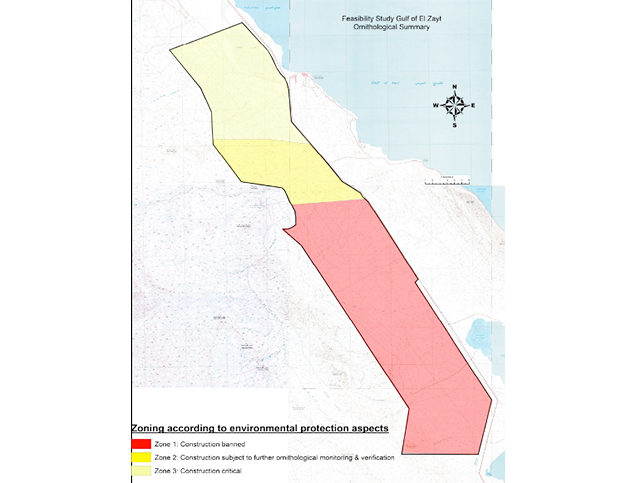
Title: Zoning of the "NREA concessionary area" for bird protection.
Source: Click Here
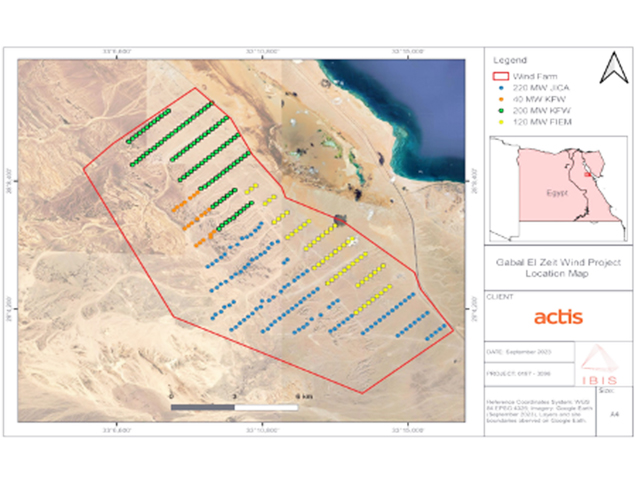
Title: Gabal El Zeit Wind Project location map
Source: Click Here
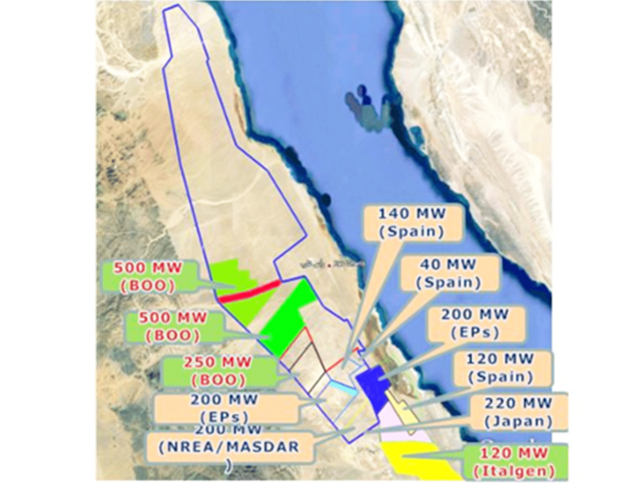
Title: Layout of the Expansion area of Gabal El Zeit wind Farms including 11 wind farms in this location from 140MW to 500 MW
Source: Click Here
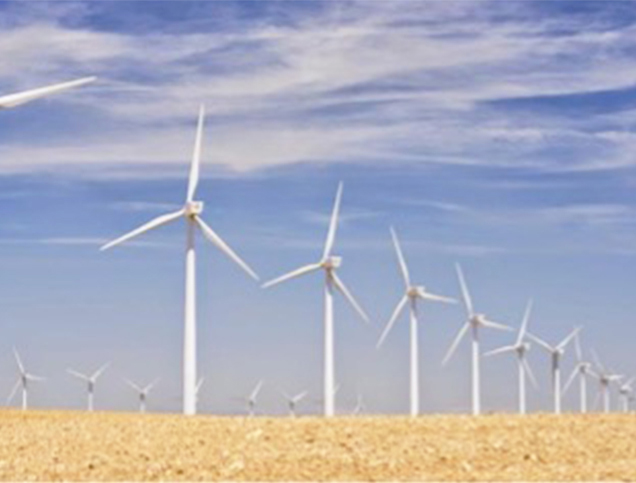
Title: Largest Power Plant in Gabal El Zeit
Source: Click Here
Title: Zoning of the "NREA concessionary area" for bird protection.
Source: Click Here
Title: Gabal El Zeit Wind Project location map
Source: Click Here
Title: Layout of the Expansion area of Gabal El Zeit wind Farms including 11 wind farms in this location from 140MW to 500 MW
Source: Click Here
Title: Largest Power Plant in Gabal El Zeit
Source: Click Here
To realize these objectives, the Gabal El Zeit complex spans roughly 100 square kilometers and includes several large-scale installations built in successive development phases.10 11 The combined installed capacity exceeds 580 MW, supported by advanced wind-turbine and grid-integration technologies. 12 Key components include:
– A 580 MW wind-farm expansion supported by the European Bank for Reconstruction and Development (EBRD) with approximately USD 140 million financing13 14
– A 220 MW wind-power plant financed through a concessional loan from the Japan International Cooperation Agency (JICA).15
– Around 290 wind turbines distributed across the site, connected to Egypt’s high voltage grid via dedicated transmission lines. 16 17
– Additional planned capacity of 500MW under environmental and social-impact assessment for future expansion. 18
The project integrates robust environmental-management measures, including impact evaluations, continuous bird-migration monitoring, 19 20 21 and community-engagement plans to ensure sustainable operation and local participation. 22 23


The Egyptian Government, through the New and Renewable Energy Authority (NREA), leads the project’s implementation in collaboration with EBRD, JICA, and private developers such as Actis. Electricity generated is supplied to the national grid under agreements with the Egyptian Electricity Transmission Company (EETC). 24 25
The project also involves partnerships with international development-finance institutions providing concessional loans and technical assistance to secure long-term project viability. 26 27 28
Implementation proceeded in three main phases: 29 30 31
– Phase 1: 220 MW JICA-funded plant. 32
– Phase 2: 580 MW expansion supported by EBRD. 33
– Phase 3: Additional 500MW capacity under assessment. 34
Completed phases are fully operational, contributing substantially to Egypt’s renewable-energy capacity and providing clean electricity for the Red Sea Governorate.35 The project strengthens Egypt’s leadership in regional renewable-energy transition and demonstrates effective public-private and international cooperation in sustainable-energy development . 36 37
Project Link
Endnotes
References
An online library where you can explore relevant data on urban development in the Arab cities.
More


Lorem ipsum dolor sit amet consectetur. Lacus nibh neque erat massa elementum. Ultricies ante sed sed nunc massa ider.
Last updated 3 mins ago
Lorem ipsum dolor sit amet consectetur. Lacus nibh neque erat massa elementum. Ultricies ante sed sed nunc massa ider.
Last updated 3 mins ago
Lorem ipsum dolor sit amet consectetur. Lacus nibh neque erat massa elementum. Ultricies ante sed sed nunc massa ider.
Last updated 3 mins ago
Lorem ipsum dolor sit amet consectetur. Lacus nibh neque erat massa elementum. Ultricies ante sed sed nunc massa ider.
Last updated 3 mins ago
Lorem ipsum dolor sit amet consectetur. Lacus nibh neque erat massa elementum. Ultricies ante sed sed nunc massa ider.
Last updated 3 mins ago
Lorem ipsum dolor sit amet consectetur. Lacus nibh neque erat massa elementum. Ultricies ante sed sed nunc massa ider.
Last updated 3 mins ago