loader image
Back

From Baku at WUF13: AUDI and UN-Habitat Launch a Report on Urban Development in Arab Cities
19 May 2026
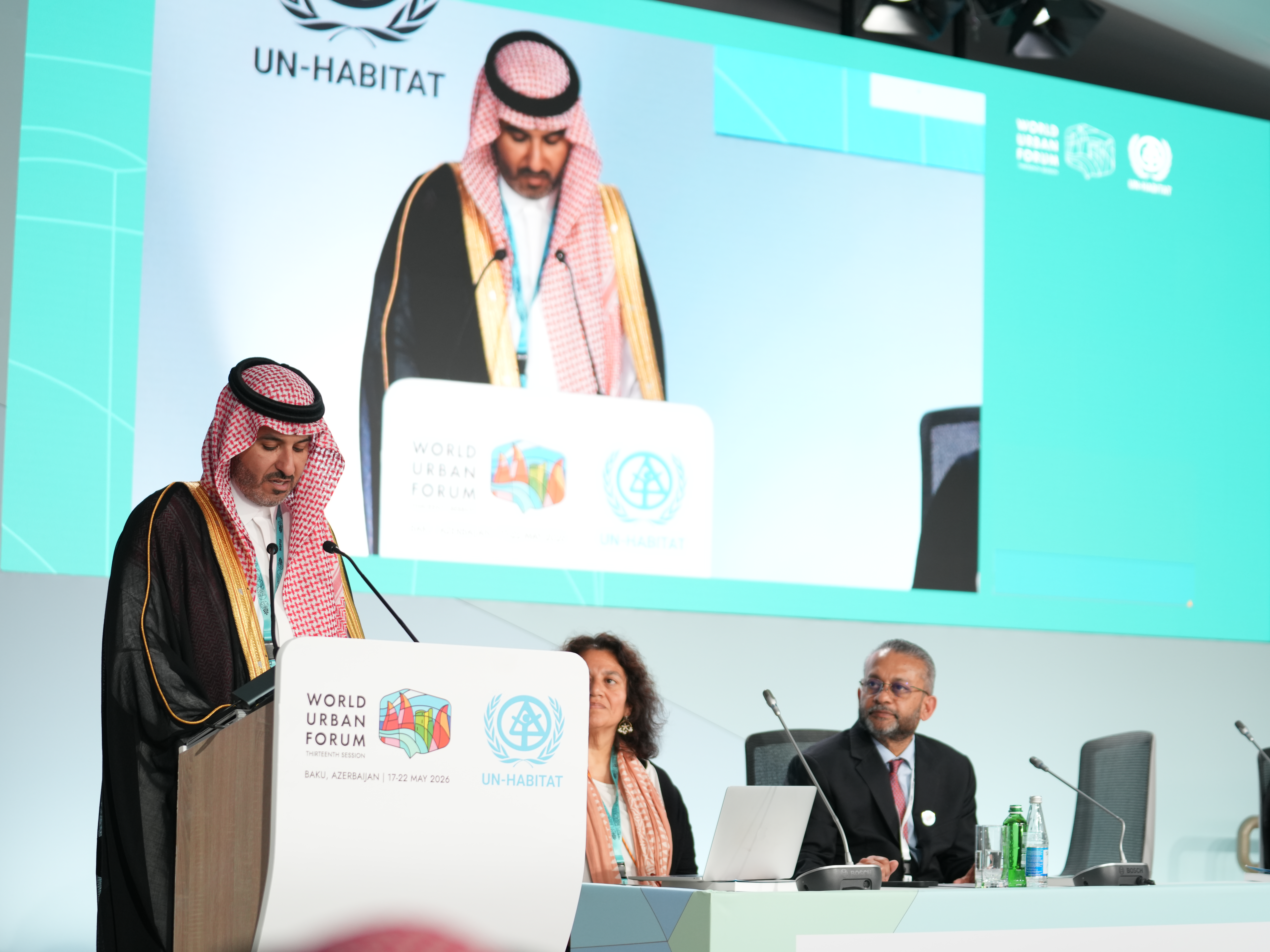
The Arab Urban Development Institute (AUDI), in collaboration with United Nations Human Settlements Program (UN-Habitat), officially unveiled a landmark report titled “The State of Arab Cities Report 2026: Housing, Land and Basic Services as Foundations for Resilient Urbanization.” The report was launched during a dedicated session held as part of the 13th World Urban Forum in Baku, bringing together representatives of international organizations, city mayors, and urban experts to explore strategies for strengthening the resilience of Arab cities and enhancing their capacity to respond to evolving challenges and crises. The report offers a comprehensive regional assessment of how Arab cities are addressing interconnected pressures, including conflict and displacement, climate change, water scarcity, and energy-related challenges. The session was moderated by Nagwa Lachine, Program Officer at UN- Habitat ROAS, and opened with remarks by H.E. Dr Anas Almughairy, AUDI Director General, who emphasized that the report centers on the importance of addressing housing, land, and basic services as interconnected pillars that underpin urban sustainability under public policies. Dr. Almughairy noted that the breakdown of any of these pillars — whether through rising housing costs, inadequate legal protection for land ownership, service interruptions, or mounting pressure on infrastructure — can deepen institutional instability and weaken recovery efforts. H.E. also stressed the growing importance of the housing sector for policymakers, highlighting that the report is being launched at a particularly critical moment for Arab cities. Mr. Patrick Canagasingham, Director of the Regional Program Division at UN-Habitat delivered a keynote address in which he highlighted the importance of the report and its strong alignment with the theme of the 13th World Urban Forum, “Housing the world: Safe and resilient cities and communities.” The session linked the report’s findings to ongoing global discussions on recovery from crises, reconstruction efforts, and risk- informed urban development, emphasizing that resilient housing systems and reliable basic services have become essential pillars for advancing stability and sustainable development across the region. The report’s technical presentation was delivered by Dr. Fadi Hamdan, Systemic Risk and Resilience Independent Expert, who reviewed the efforts and initiatives undertaken by cities across the region to expand housing and basic services and allocate land in response to the growing demand for housing. The report provides a qualitative analysis of housing, land, and essential services, while also highlighting the key challenges that continue to hinder the achievement of sustainable urban development. Mr Khalid Mohammed Alghamlas, Deputy Minister for Urban Planning and Land at the Ministry of Municipalities and Housing, also addressed the session, underscoring the importance of advancing effective solutions to the challenges highlighted in the report. At the conclusion of the session, Eleonora Serpi, Associate Program Management Officer, Land, Housing and Informal Settlements Section at UN-Habitat delivered a presentation in which she stressed the importance of aligning and integrating urban policies to address housing, land, and basic services as interconnected components within a comprehensive urban development framework. In their closing remarks, participants reaffirmed the importance of expanding regional cooperation and reinforcing future partnerships in order to support the implementation of the report’s recommendations and contribute to advancing sustainable urban development across the region.