Close
Approach Words: Comprehensive Management, Smart Mobility, Sustainability
Public Policy Instruments: Financial Mechanism, Physical Intervention, Planning, Regulatory
The Electric Vehicles (EVs) and Charging Infrastructure project in Bahrain is a key initiative focused on incorporating clean technologies1 into the nation’s transportation system. It supports the development of green infrastructure,2 efficient energy management,3 sustainability and innovation, while also encouraging inclusivity, public education and awareness that promote EV adoption.4 Envisioned as a driver of “accelerating Bahrain’s transition to sustainable mobility”.5
The project aligns with Bahrain’s Economic Vision 2030,6 its goal of achieving carbon neutrality by 2060,7 and national sustainability and climate objectives.8 Driven by increasing awareness and supportive government policies,9 it seeks to revolutionize/transform Bahrain’s transportation sector by promoting widespread adoption of EVs and establishing a robust EV charging infrastructure.10 It also aims to reduce carbon emissions by up to 22% in the short term, enhancing energy security,11 and meeting the rising demands for cleaner, zero-emission transport options.12

Title: ABB and KPS expanding EV infrastructure in Bahrain
Source: Click Here

Title: Solar-powered EV charging station at ALBA Factory in Bahrain: A sustainable step by Meagle Sun and VINCI Energies to reduce carbon emissions
Source: Click Here

Title: Hilton Bahrain and McLaren Bahrain celebrate the launch of a new EV charging station with the McLaren Artura.
Source: Click Here

Title: Electric vehicle charging station by the Electricity & Water Authority (EWA) in the Kingdom of Bahrain
Source: Click Here
Title: ABB and KPS expanding EV infrastructure in Bahrain
Source: Click Here
Title: Solar-powered EV charging station at ALBA Factory in Bahrain: A sustainable step by Meagle Sun and VINCI Energies to reduce carbon emissions
Source: Click Here
Title: Hilton Bahrain and McLaren Bahrain celebrate the launch of a new EV charging station with the McLaren Artura.
Source: Click Here
Title: Electric vehicle charging station by the Electricity & Water Authority (EWA) in the Kingdom of Bahrain
Source: Click Here
To implement this vision, a comprehensive plan was proposed, featuring the following key components:
(1) Policy and financial incentives:13
(2) Infrastructure Expansion:
(3) Implementation Strategies:
The project delivers wide ranging benefits across multiple sectors. private EV owners enjoy enhanced convenience and accessibility through the growing network of charging facilities, making electric vehicle ownership more practical and appealing.24 Logistics and delivery companies transitioning to electric fleets gain from expanded infrastructure, enabling efficient operations while reducing costs and emissions.25 Businesses and corporate offices can offer charging facilities, promoting sustainability and social responsibility.26 Additionally, the project contributes to improved air quality and reduced noise pollution, benefiting residents and tourists alike.27 28 Moreover, it opens investment opportunities for local businesses in the growing EV market,29 while helping Government of Bahrain achieves its national sustainability and environmental goals.30

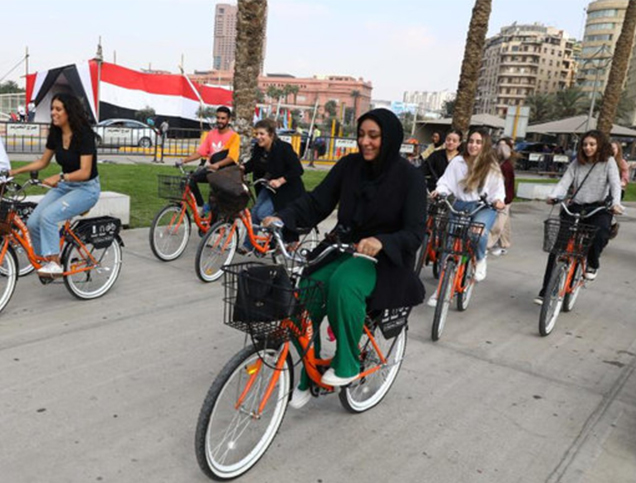
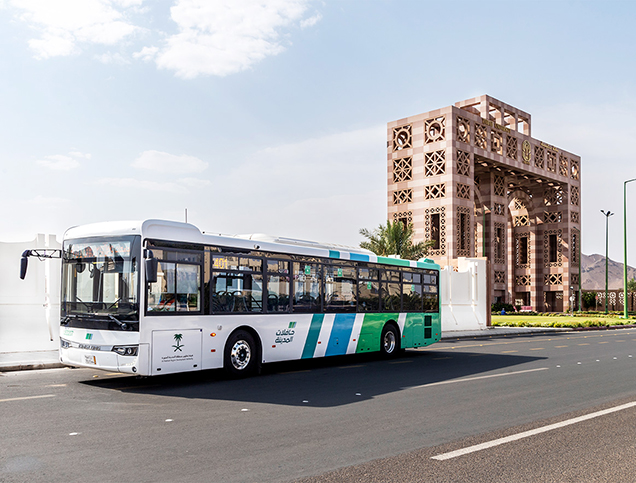
Key stakeholders in the project encompass a wide range of governmental and private entities. The Transportation and Telecommunications Ministry (MTT) introduced emissions-free electric scooters and bikes.31 The Ministry of Electricity and Water Affairs (MEWA) and ABB Co. are supplying five 360-kilowatt charging stations.32 Besides, the Ministry of Industry and Commerce (MOIC) is involved in regulating the import, sale, and circulation of electric cars and their chargers in local markets.33 The private sector, including EV manufacturers, charging infrastructure providers, and local businesses, are instrumental in driving innovation and investment.34 35 Additionally, Bahrain National Insurance (BNI) introduced the first EV-specific motor insurance policy.36
The first charging station for electric cars was opened in April 2021 at the Atrium Mall in Saar,37 with other implementations expected to begin in 2025, to occur in multiple phases:
(1) 2025-2027: Establishing pilot charging stations in key urban centers and highways.38
(2) 2027-2030: Expanding the charging network to residential areas and public spaces.39
(3) 2030 onwards: Deploying and improving the EV infrastructure network.40
Project Link
Endnotes
N.A.
References
An online library where you can explore relevant data on urban development in the Arab cities.
More









Lorem ipsum dolor sit amet consectetur. Lacus nibh neque erat massa elementum. Ultricies ante sed sed nunc massa ider.
Last updated 3 mins ago
Lorem ipsum dolor sit amet consectetur. Lacus nibh neque erat massa elementum. Ultricies ante sed sed nunc massa ider.
Last updated 3 mins ago
Lorem ipsum dolor sit amet consectetur. Lacus nibh neque erat massa elementum. Ultricies ante sed sed nunc massa ider.
Last updated 3 mins ago
Lorem ipsum dolor sit amet consectetur. Lacus nibh neque erat massa elementum. Ultricies ante sed sed nunc massa ider.
Last updated 3 mins ago
Lorem ipsum dolor sit amet consectetur. Lacus nibh neque erat massa elementum. Ultricies ante sed sed nunc massa ider.
Last updated 3 mins ago
Lorem ipsum dolor sit amet consectetur. Lacus nibh neque erat massa elementum. Ultricies ante sed sed nunc massa ider.
Last updated 3 mins ago