
AUDI Director General Explores Future of Saudi Cities at Panel Discussion
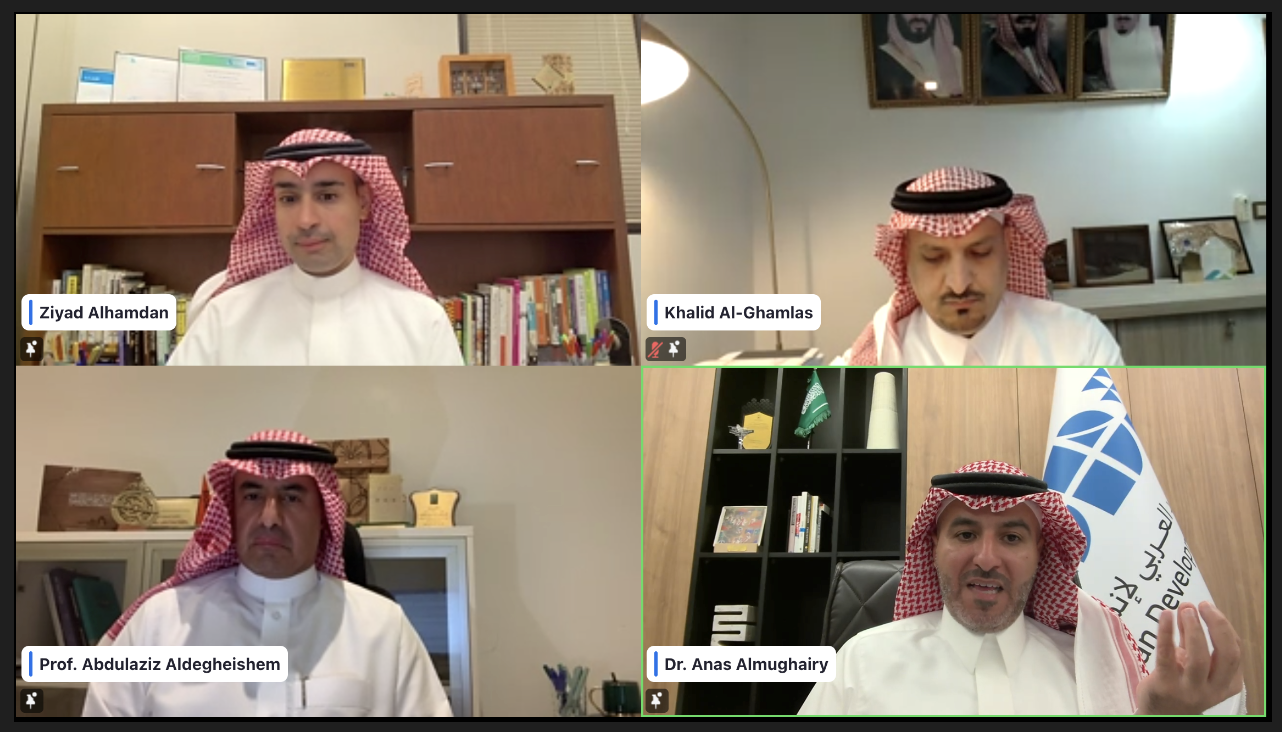
H.E. Dr. Anas Mofarreh Almughairy, Director General of the Arab Urban Development Institute (AUDI), participated in a panel discussion titled “The Future of Saudi Cities: Aligning Urban Planning, Development, and Quality of Life,” held on Tuesday, October 27, 2026, as part of the Urban October 2026 events.
Held under the patronage of H.E. Mr. Majed bin Abdullah Al-Hogail, Minister of Municipalities and Housing (MOMAH), the event was organized by MOMAH and King Saud University, in partnership with the National Housing Company (NHC), and in collaboration with the United Nations Human Settlements Program (UN-Habitat) and the United Nations Development Program (UNDP).
The discussion featured contributions from Mr. Khalid Al-Ghamlas, Deputy Minister for Urban Planning and Land at the Ministry of Municipalities and Housing (MOMAH), and Professor Abdulaziz Aldegheishem, Vice President for Projects at King Saud University (KSU). Dr. Ziyad Al-Hamdan, Assistant Professor in KSU’s Department of Urban Planning, moderated the discussion.
The panel examined the future of Saudi cities amid the Kingdom’s ongoing urban transformation, emphasizing the need to align urban planning with economic and social development. It also highlighted the role of urban policies and projects in improving urban efficiency and enhancing quality of life, while exploring emerging opportunities and trends for developing cities that better respond to residents’ needs and aspirations.
In this context, Dr. Anas Almughairy emphasized that Saudi Vision 2030 is shaping the future of the Kingdom’s cities through a far-reaching urban transformation. He noted that the success of this transformation should be measured not only by the scale of infrastructure and urban development projects, but also by their ability to meet society’s aspirations and engage residents in shaping their cities. He stressed that the true value of urban development lies in creating more efficient and vibrant cities that enhance quality of life and place people at the heart of urban priorities.
Dr. Almughairy also highlighted the importance of revitalizing underutilized urban land, describing it as an untapped economic and development opportunity that can otherwise impose additional costs on cities. He noted that developing these sites through urban projects can stimulate local economic activity, enhance land values, and drive growth in surrounding areas. Such efforts, he emphasized, optimize the use of urban resources and generate development benefits that extend far beyond the project sites themselves.
AUDI’s participation in the panel discussion reflects its broader commitment to advancing dialogue on urban development, promoting knowledge and expertise exchange among stakeholders, and providing insights and strategic guidance to support the development of Arab cities.